





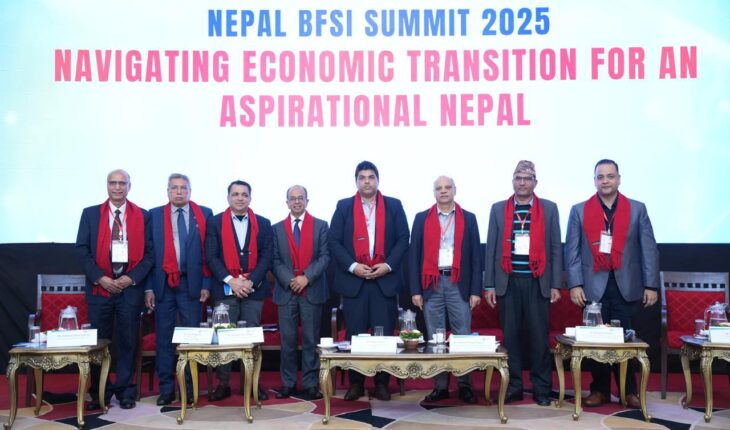
KATHMANDU: Nepal’s growth aspirations, supported by further simplification of doing-business processes, can help the country navigate its economic transition and secure long-term advantages, Vice-Chairman of the country’s National Planning Commission (NPC) Dr Prakash Kumar Shrestha said on Friday (Dec 19, 2025.
Shrestha was delivering the keynote address at the 4th edition of the annual “Nepal BFSI Summit 2025”, held at Hotel Radisson, Kathmandu, and organised by the PHDCCI India-Nepal Centre in association with the Banking, Finance and Insurance Institute of Nepal (BFIN).
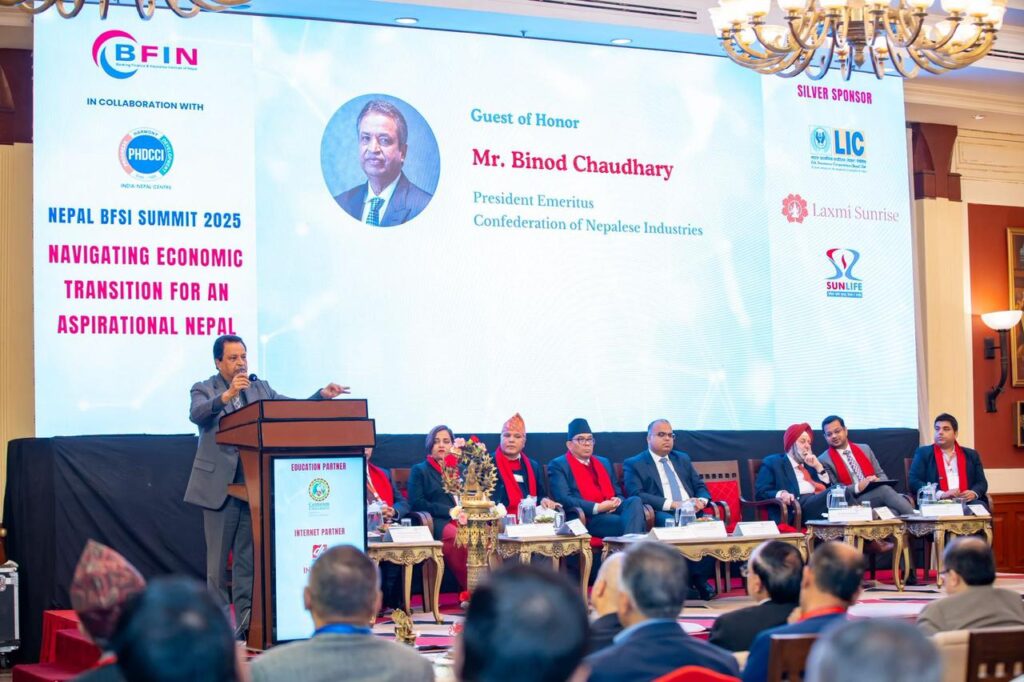
He said the NPC remained committed to progressive policies aligned with the Sustainable Development Goals (SDGs).
The summit focused on the theme “Navigating Economic Transition for an Aspirational Nepal”, with participants discussing how Nepal can manage transition amid uncertainty while preparing for future opportunities.
Sessions centred on economic reforms for inclusive development, the role of the banking, financial services and insurance (BFSI) sector in managing transitions, evolving financial landscapes, and the expansion of green and nature-based financing.
The organisers said the event aimed to generate actionable insights for policymakers, regulators and financial leaders to position BFSI as a catalyst for industrial competitiveness, employment generation, digital resilience and sustainable prosperity.
Highlighting the importance of regional cooperation, Ambassador Manjeev Singh Puri, Chair of the India-Nepal Centre at PHDCCI and former Ambassador of India to Nepal, said the summit reaffirmed the centrality of India-Nepal bilateral cooperation in navigating economic transition and exploring new avenues for collaboration.
Dr Rakesh Pandey, Deputy Chief of Mission at the Embassy of India in Nepal, spoke about steps being taken to strengthen the India-Nepal payment ecosystem, including expanding the use of the UPI interface.
He also referred to the provision permitting Indian currency notes of ₹200 and ₹500 as legal tender for Nepal travel up to a value of ₹25,000, and identified BFSI as a key frontier of bilateral economic cooperation.
Calling for deeper reforms, Atul K. Thakur, Senior Secretary, India-Nepal Centre, PHDCCI, said Nepal should think “deeply” about economic reforms, arguing that such changes can create multiplier effects across key sectors, including BFSI, and support long-term inclusive growth.
From the private sector, Binod Chaudhary, President Emeritus of the Confederation of Nepalese Industries (CNI), urged stronger collaboration between CNI and PHDCCI to create a more supportive policy environment.
“The rise of India opens up a lot of opportunities for Nepal, and this is the time to further strengthen India-Nepal economic cooperation,” he said.
Bam Bahadur Mishra, Deputy Governor of Nepal Rastra Bank (NRB), said the central bank is committed to policies supportive of the banking sector, adding that maintaining balance in the financial system through progressive measures would help the Nepalese economy emerge stronger.
The summit featured speakers from banking, regulation, multilateral institutions and industry, including Dr Gunakar Bhatta (former Executive Director, NRB), Ram Kumar Tiwari (MD & CEO, Nepal SBI Bank), Pranav Gupta (Resident Representative, IMF-Nepal) and Neelesh Man Singh Pradhan (CEO, Nepal Clearing House).
It also drew representatives from Nepal’s insurance and guarantee institutions, business chambers, academia and green finance organisations.
In his concluding remarks, Dr Binod Atreya, Managing Director, BFIN, said the Nepal BFSI Summit 2025 enabled dynamic panel discussions and technical sessions, bringing policymakers, environmental experts and industry leaders together to exchange insights.
He added that the annual initiative would continue to advocate stronger support for the BFSI sector through collaboration with key stakeholders, including India.