






KOLKATA: Bhutan moved a step closer to turning its proposed “Gelephu Mindfulness City” into bricks and mortar after pitching the US-$15 billion scheme to Indian business leaders at a roadshow in Kolkata on 17 July.
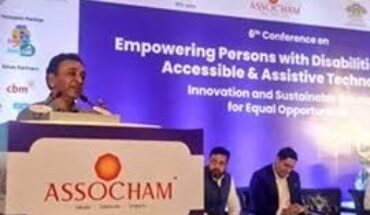
Organised by the PHD Chamber of Commerce and Industry (PHDCCI) with the Bengal Chamber of Commerce & Industry and Visa Inc, the event drew banks, logistics firms and hospitality groups keen to learn how the planned carbon-neutral enclave on Bhutan’s southern border could offer new footholds in the eastern Himalayas.
Gelephu, already a key trading post 50 km from Bongaigaon in Assam, is to be recast as a 2,500 sq-km hub for technology, education, wellness and green finance. Bhutan’s king, Jigme Khesar Namgyel Wangchuck, unveiled the concept in December 2023 and has since visited India twice to drum up support. Prime Minister Tshering Tobgay has called the project “co-operative capitalism”, noting that every Bhutanese citizen will hold a stake.
“Gelephu is not merely a real-estate venture; it is a long-term nation-building exercise grounded in sustainability and mindfulness,” said Kinley P Dorji, communications director of the Gelephu Mindfulness City Authority, as he invited Indian companies to form joint ventures in renewable power, eco-tourism and higher education. The authority is due to release a detailed master plan by year-end.
Ugyen Tenzin, chief executive of DK Bank, told delegates that Bhutan will offer 100 per cent foreign ownership in select sectors, streamlined land leases and tax holidays of up to ten years. “We are designing a regulatory sandbox that balances investor certainty with our carbon-negative mandate,” he said.
Indian interest appeared strongest in infrastructure finance and services. Anirudha Barooah, regional head of India Exim Bank, said the lender was “open to tailored credit lines” for projects that meet both Bhutanese goals and India’s Act East policy. Dushyant Thakor of the World Association of Investment Promotion Agencies urged the two governments to structure a cross-border special-purpose vehicle to speed approvals.
Speakers from Visa, IIM Calcutta and WAIPA underlined the sub-regional dimension. “With Nepal positioned as a trilateral ally, Gelephu could anchor a North-East–Bhutan–Nepal corridor for digital payments, higher education and medical tourism,” said Dr Shiladitya Chatterjee, economic adviser to the Bengal chamber.
Analysts note that Bhutan, landlocked and home to fewer than 800,000 people, has long relied on hydropower exports to India. The mindfulness-city gambit seeks to diversify the economy by luring knowledge industries and high-value visitors, while keeping emissions below net-zero. The target is to break ground in 2026 and achieve an initial population of 50,000 by 2035.
Atul K Thakur, secretary of PHDCCI’s India-Nepal Centre and moderator of the roadshow, said the chamber would compile expressions of interest for presentation to the Bhutanese government next month. Follow-up visits to Gelephu are planned for the fourth quarter.
Industry observers called the Kolkata leg a useful reality check. “Bhutan set an ambitious vision; now it must translate that into bankable projects with clear timelines,” said Subir Bhaumik, former BBC bureau chief and a panellist. “Indian investors are keen but will need comfort on land rights, repatriation of profits and infrastructure connectivity.”
Bhutanese officials said a dedicated economic-corridor agreement with Assam—to cover highways, power links and digital fibre—was “under advanced discussion” and could be signed before the end of the fiscal year.
If realised, the zero-carbon city could shift trade patterns across north-east India, offering a new gateway for goods moving between the Bay of Bengal and the Himalayas. For now, Bhutan’s pitch is simple: mindfulness can also be a business model—provided the money follows the mantra.