





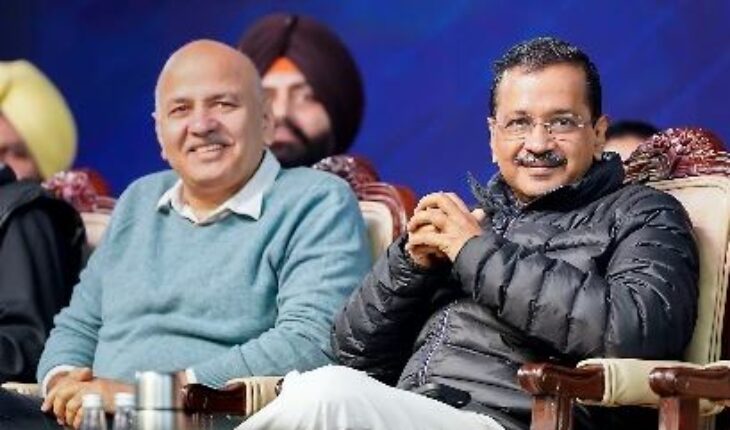
CHANDIGARH: In a high-stakes verdict with political ripples far beyond the Capital, a Rouse Avenue court discharged AAP chief Arvind Kejriwal and former Deputy Chief Minister Manish Sisodia in the excise policy case, handing the party a crucial boost at a time when it is confronting mounting anti-incumbency and simmering discontent in its only ruled state Punjab.
Citing “serious gaps in the investigation” and lack of prosecutable evidence, the court’s ruling brought temporary closure to nearly two years of legal battles, arrests, and sustained political attacks that had cast a shadow over AAP’s anti-corruption plank.
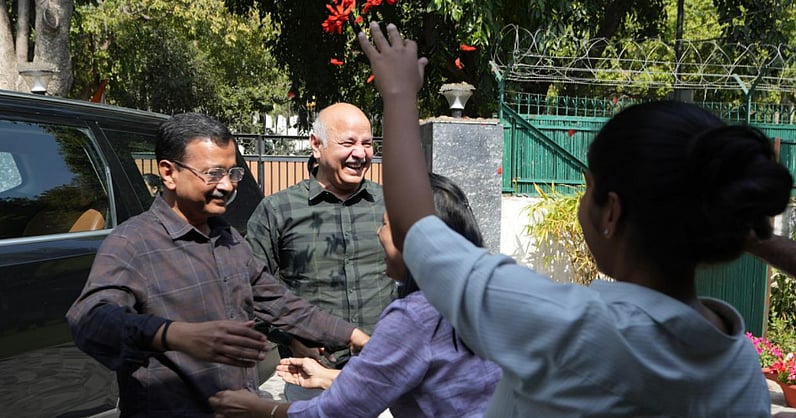
The timing of the verdict is politically significant. With Punjab headed toward the 2027 Assembly elections, AAP has been facing mounting governance challenges and visible rural discontent. The discharge order now offers the party an opportunity to reset the narrative.
A visibly emotional Kejriwal, addressing supporters after the verdict, declared,
“I am not corrupt. The court has said that Kejriwal and Manish Sisodia are honest. Today, the court has discharged all accused and affirmed that AAP is honest.”
He described the case as a “big political conspiracy” that led to the unprecedented arrest of a sitting Chief Minister and what he called prolonged harassment of the party’s leadership.
For AAP, the judgment provides more than legal relief — it restores its political vocabulary. The slogan of being “kattar imaandaar” (staunchly honest), which had taken a hit during the investigation, is once again being pushed to the forefront.
Punjab Chief Minister Bhagwant Mann quickly amplified the message calling the ruling a “victory of truth.” In a post on X, Mann wrote in Hindi and Punjabi, “Truth always prevails… With time, the truth in all other cases will also come to light. Inquilab Zindabad.”
While the ruling carries national overtones, its sharpest political impact will likely be felt in Punjab.
Since its landslide 2022 victory winning 92 of 117 seats AAP has governed Punjab as its flagship state experiment. The party promised systemic reform, free electricity, better healthcare and education, and transparent governance.
However, as the government enters its fifth year the sheen of its sweeping mandate has dulled.
Rural distress, farmer anger over MSP guarantees and crop diversification, unemployment concerns, and administrative bottlenecks have fueled murmurs of anti-incumbency. Opposition parties the Congress, Shiromani Akali Dal (SAD), and the BJP have sensed vulnerability.
The Congress is attempting to consolidate its traditional base the Akali Dal is seeking to revive its rural Sikh vote bank and the BJP, post its split with the Akalis, is working aggressively to expand its independent footprint in the state.
Recent opinion surveys suggest AAP’s popularity has dipped from its 2022 high, with internal factionalism and bureaucratic inertia adding to the perception of drift. In this backdrop, the clean chit serves as a psychological and political boost for AAP’s cadre in Punjab. Party strategists believe the verdict allows them to pivot from defensive politics to assertive campaigning.
While Delhi’s excise policy became a legal battlefield, Punjab’s revamped excise model under the Mann government has recorded a significant increase in revenue collections. The party sources said that AAP leaders in Punjab are expected to aggressively contrast the two models, arguing that reform was criminalised for political ends.
On the other hand the BJP has termed the verdict “temporary relief,” indicating that legal battles are far from over. Farmer unions, meanwhile, have shown little interest in courtroom outcomes, insisting that agrarian distress and economic issues remain the real electoral tests.
For AAP, the challenge now is to convert legal vindication into political consolidation in Punjab. But at a moment when the party appeared cornered and defensive, the court’s ruling has handed it the much needed momentum.