




Shia Hatred is Much Deeper
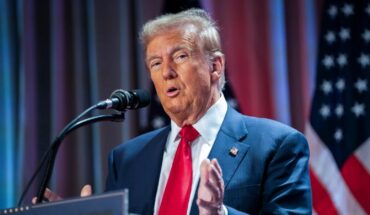
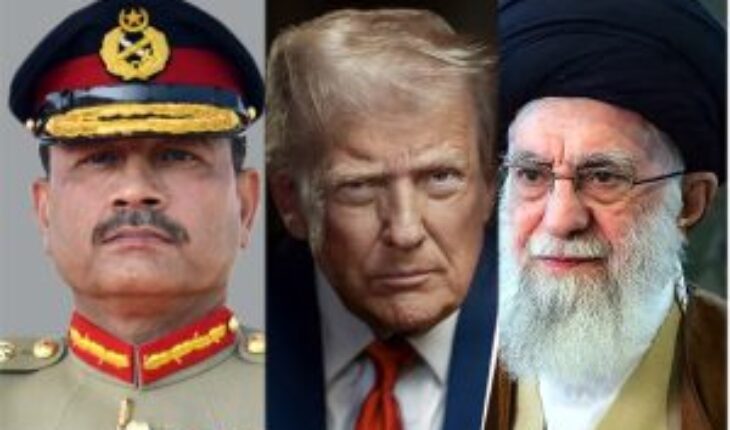
For many in New Delhi, the recent US President Donald Trump’s hug to Pakistan is just a ‘tactical romance’ or he being inducted in the inner-circle of White House to become a crucial ally of Washington, but the fact is that Trump has hosted Pakistani army chief Asim Munir, an unprecedented event that an army chief is being accorded the protocol reserved for the head of a government, but for Trump, who is not very fond of adhering to the established protocols, anything is possible.
However, the optics of Trump hosting Munir are significant, and cannot be ignored. For Pakistani Generals and their secret police, Inter-Services Intelligence (ISI), hatred against Iranian, who follow Shite cult of Islam, is much deeper than the “uncouth infidel idol-worshippers, Hindus, and they finally decided to support the US in crushing Mullah-regime of Iran. The script of the renewed American-Pakistani cooperation was finally consented during the luncheon meeting.
Meanwhile, Trump has claimed that he wanted to thank Munir for the handing over of the alleged suspect to the American authorities, who was responsible for the deadly Abbey Gate bombing at Kabul airport in August 2021 – which had occurred as thousands of Afghans tried to flee following the Taliban takeover. With the help of Asim Munir, the US finally got the perpetrator. It may be recalled that on June 10, General Michael E Kurilla, chief of the US Central Command (CENTCOM), had detailed how the Pakistani army’s cooperation led to the capture of the suspected Abbey Gate bomber.
He further stated, “They [Pakistan] are in an active counterterrorism fight right now, and they have been a phenomenal partner in the counterterrorism world, in a testimony before the House Armed Services Committee in Washington.
Later, speaking to the media in the Oval Office after lunch with Munir on, Trump noted that the Pakistanis “know Iran very well, better than most,” but added that they are “not happy”. He did not elaborate that the sectarian hatred against Shias are deeply entrenched in the Sunni-dominated Pakistani establishment or armed forces. Few, however, appear to be ready to subscribe in New Delhi to Trump’s much repeated statement that the main reason for meeting Munir was to thank him for his role in defusing the May conflict between Pakistan and India, a confrontation that brought the region, home to more than 1.6 billion people, to the brink of nuclear war.
“The reason I had him here was that I wanted to thank him for not going into the war [with India]. And I want to thank PM [Narendra] Modi as well, who just left a few days ago. We’re working on a trade deal with India and Pakistan,” reaffirmed Trump, who is known to enjoy a warm relationship with the Indian Prime Minister.
Referring to Munir that he was honoured to meet him and further praised Modi and Munir that “These two very smart people decided not to keep going with a war that could have been a nuclear war. Pakistan and India are two big nuclear powers. It may be recalled that the India-Pakistan crisis had engulfed the Indians sub-continent after an April attack at Pahalgam in Jammu Kashmir region of India that had killed 26 Indian civilians. India has been facing the Pak-sponsored terrorist attack for several decades.
Munir’s Initiative– It goes to the credit of General Munir that his efforts to win the support of White House has finally succeeded, and now he is being inducted as one of the confidants of Trump in the inner circle. Earlier, many within the US strategic community also had started questioning Pakistan’s credibility as a reliable security partner, especially after 9/11 architect Osama bin Laden was found in Abbottabad, close to Rawalpindi, home to Pakistan’s military headquarters in 2011. Since the Taliban’s return to power in August 2021, the strategic partnership had waned further. During this decade, Pakistan was seen increasingly turning towards China for economic, military and technological support.
There are some differences about this recent US tilt towards Pakistan. According to some analysts,” the evolving relationship should be viewed as a product of Trump’s personal position, rather than institutional policy”. Marvin Weinbaum, a senior fellow at the Middle East Institute (MEI), has observed, “We are dealing with an administration which changes its tune by the hour. There is no process here, one minute the US has no interest, and the next minute priorities change rapidly. You’re dealing with an administration that is mercurial and personalised, and you don’t associate that with traditional US foreign policy.”
Happy Days Are Ahead– In the tradition of army dictators like Ayub Khan, Zia-ul-Haq and Pervez Musharraf, Field Marshal Asim Munir is also acceptable as the uncrowned-ruler of Pakistan. By hosting the lunch to the army chief, Trump has not only endorsed the concept of a hybrid regime i.e. a military regime with a civilian face, he has also scripted a new alliance in the region. The Chinese reaction to the luncheon meeting is sceptical. They have deep economic and strategic ties with Iran and Pakistan.
During the current week, Munir has been seen reinventing ties with Trump, while Israel is pounding Iran with lethal weapons. Pakistan’s silence right now is deafening, it is being asked that a country that never misses a chance to claim it’s the guardian of the Ummah (global Muslim community). Its silence is deafening. Munir has paved the way for more American investments, especially in the mining sector, perhaps at the cost of the Chinese financial interests.
Gopal Misra has been associated with national and international media. His books on journalism and geo-politics have been well-appreciated. Views are personal.