





Chandigarh: The Haryana government has approved the final alignment of the Gurugram–Faridabad–Noida–Greater Noida Namo Bharat RRTS-cum-Metro corridor, with Chief Minister Nayab Singh Saini saying the project will provide fast, seamless and modern connectivity to lakhs of commuters and significantly reduce travel time across key NCR cities, at a time when the Economic Survey 2025–26 has warned that congestion is emerging as a serious drag on productivity and economic growth.
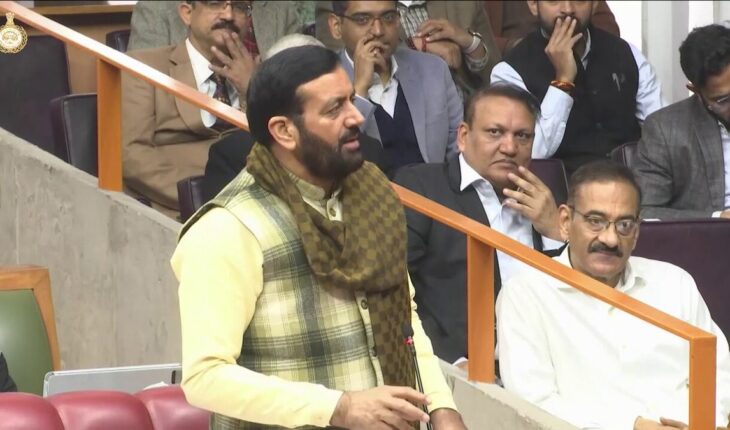
Announcing the decision in the Haryana Legislative Assembly, Saini said the 64-km corridor, including nearly 52 km in Haryana, will integrate Gurugram, Faridabad and Noida into a high-speed regional transit network. The Detailed Project Report is being finalised and directions have been issued to the National Capital Region Transport Corporation for execution. Calling it a transformative initiative, the CM said the project will not only ease congestion but also support investment, employment generation and balanced urban growth while meeting the future mobility needs of rapidly expanding cities like Gurugram and Faridabad.
The urgency of such intervention has been highlighted by the Economic Survey, which noted that commuters in Indian cities lose 76 to 117 hours every year due to traffic congestion, resulting in significant losses in labour productivity and business efficiency. With urban areas expected to house 600 million people and contribute nearly 70 per cent of GDP by 2036, the Survey warned that inefficient mobility systems could constrain India’s growth momentum.
The new corridor is aimed at directly addressing these risks by improving connectivity between residential areas and major employment hubs.
In Gurugram, an integrated 14.5-km RRTS-Metro stretch between IFFCO Chowk and Gwal Pahari, with stations at Sector-29, Millennium City Centre, Sector-52, Wazirabad, Sector-57 and Sector-58/61, will connect with the Delhi Metro Yellow Line, Gurugram Metro and Rapid Metro, ensuring seamless multimodal integration and faster cross-city movement.
Similarly, in Faridabad, a 16-km section from Sainik Colony to Badshahpur, covering NIT, Bata Chowk, Sectors 12 to 15 and parts of New Faridabad, will connect with the Delhi Metro Violet Line, improving access between residential, commercial and industrial areas.
The Economic Survey has emphasised that expanding efficient mass transit is critical to reduce travel delays, as housing shortages and urban sprawl have pushed workers farther from workplaces, increasing commute time and congestion. High-capacity regional transit systems such as the Namo Bharat corridor can help bridge this gap by enabling faster, reliable and integrated mobility.
Saini said the corridor has been planned with environmental safeguards, including installation of noise barriers along urban stretches, and assured that the DPR will be finalised soon to accelerate implementation.
Once operational, the project is expected to cut travel time, reduce traffic pressure, improve worker mobility and enhance productivity, reflecting the kind of integrated transport expansion the Economic Survey has identified as essential to sustain urban growth and economic efficiency.