






Amid Fears of Cross-Party Poaching, Complaint Lodged in Shimla as Three Candidates Vie for Two Crucial Seats
CHANDIGARH In a dramatic escalation of political maneuvering hours before the Rajya Sabha elections in Haryana, the state Congress unit has accused senior Bharatiya Janata Party (BJP) leaders of attempting to bribe its MLAs to secure votes. The complaint, filed with the Himachal Pradesh Police in Shimla, comes as the Congress takes preemptive measures to safeguard its legislators from alleged poaching efforts, highlighting the intense rivalry in a contest that has unexpectedly turned contentious.
The allegations surfaced just days before the polls, which are set to fill two Rajya Sabha seats from Haryana. What was anticipated to be a straightforward partisan affair has been complicated by the entry of a third candidate, injecting unpredictability into the proceedings. The BJP has fielded Sanjay Bhatia, a former Member of Parliament known for his long-standing association with the party and focus on regional development issues. On the other hand, the Congress has nominated Karamvir Baudh, a prominent Dalit activist whose candidacy underscores the party’s push to amplify marginalized voices in national politics.
Adding a twist is Satish Nandal, the BJP’s state vice president, who has thrown his hat into the ring as an Independent. Nandal, a seasoned politician with deep roots in Haryana’s rural heartland, claims to have garnered support from MLAs across party lines, potentially disrupting the traditional vote arithmetic. Sources within the Congress suggest that Nandal’s defection from the party ticket could be a calculated move to fragment opposition votes, though the BJP has distanced itself from his independent bid, calling it a personal decision.
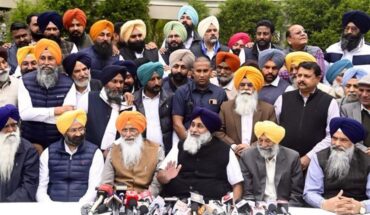
To counter any horse-trading, the Congress had strategically relocated its 29 MLAs to a resort in Shimla for the past three days, a common tactic in Indian politics to insulate legislators from inducements. However, sources revealed that key BJP leaders had reportedly reached out to several Congress MLAs during this period, offering financial incentives in exchange for their votes. The complaint, lodged on Saturday, details these interactions and urges police intervention to prevent further contact.
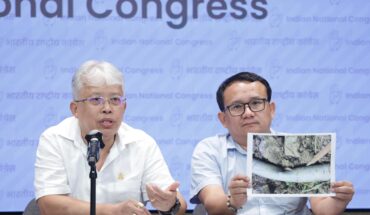
Congress general secretary in charge of Haryana affairs, BK Hariprasad, addressed the media cautiously, stating, “Some MLAs have been approached. They have given a complaint to the Shimla Police. We will speak of this only once an FIR has been registered.” As of Sunday evening, no formal FIR had been rifled, but party insiders expressed confidence that the move would deter additional overtures. Hariprasad also emphasized the integrity of the Congress MLAs, many of whom are first-time legislators and were recently given specialized training on the secret ballot process for Rajya Sabha polls—a nod to the complexities of proportional representation voting.
By late afternoon, the Congress MLAs had departed Shimla and were en route to Chandigarh, the Haryana assembly’s base, under tight security. This relocation signals the party’s readiness to consolidate its bloc ahead of the voting, scheduled for Monday in the state assembly. With the BJP commanding 41 MLAs in the 90-member Haryana Vidhan Sabha, and the Congress holding 29, the election’s outcome hinges on potential cross-voting or abstentions—precisely what the bribery claims aim to preempt.
The BJP, led by Chief Minister Nayab Singh Saini, has been consolidating power since wresting control from the Congress in 2019, but recent bypolls and internal dissent have tested its dominance. The Rajya Sabha seats, which carry six-year terms, are pivotal for both parties to bolster their upper house presence—currently, the BJP holds a slim majority nationally, while the opposition INDIA bloc, including Congress, seeks to challenge it.
Legal experts note that such allegations, if substantiated, could invite scrutiny under the Prevention of Corruption Act and anti-defection laws. Past instances, like the 2022 Rajya Sabha drama in Maharashtra, have shown how cross-voting scandals can lead to disqualifications and judicial interventions.