






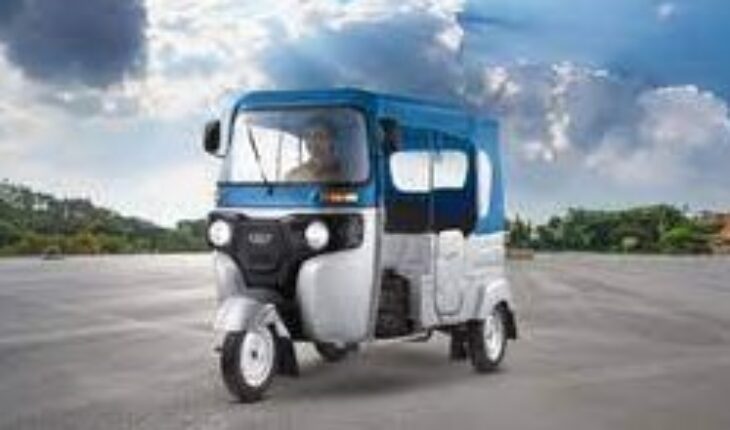
Gurugram: India has emerged as a decisive force in the global clean-mobility shift, claiming a dominant 57% share of the world’s electric three-wheeler sales in 2024 and rapidly consolidating its position as a frontrunner in zero-emission transport.
Released at COP30 in Belém, Brazil, the latest Zero-Emission Vehicle (ZEV) transition progress report by the ‘Accelerating to Zero Coalition’ highlights how India’s policy-driven push—anchored by schemes like FAME and PM E-Drive—has triggered one of the fastest EV adoptions anywhere in the world, reshaping both domestic mobility and global market trends.
The report shows that India is now also the world’s second-largest electric two-wheeler market, clocking a 6% sales share in 2024, with government incentives narrowing the cost gap between electric and internal-combustion models. This strategic focus on the country’s most widely used vehicle segments—two- and three-wheelers, which together accounted for nearly 80% of all vehicles sold last year—has created what experts describe as a “self-reinforcing cycle” of adoption, private investment, and market expansion.
The momentum is set to accelerate further, with the PM E-Drive Scheme targeting the sale of 2.5 million electric two-wheelers and 320,000 electric three-wheelers, supported by US$315 million for vehicles and charging infrastructure. This boost is already drawing in the private sector; companies like Zomato have pledged to have a 100% electric delivery fleet by 2030 and have begun piloting rental EV fleets in Delhi-NCR—signalling a maturing ecosystem increasingly aligned with national policy goals.
For the International Council on Clean Transportation (ICCT), India’s prioritisation of its largest and most polluting segments shows clear strategic intent. Amit Bhatt, ICCT’s India Managing Director, noted that electrifying two- and three-wheelers was the “right target,” and added that India’s next push—towards medium- and heavy-duty trucks that make up just 3% of the vehicle stock but contribute nearly 44% of transport emissions—is both “timely and welcome.”
Globally, the report finds, the EV transition is resilient despite policy tweaks in some advanced economies. EVs made up 18% of global light-duty vehicle sales in 2024, up from 14% in 2023, while public charging points crossed 5 million—double the 2022 count. India continued its steady rise with a 23% jump in light-duty EV sales between 2023 and 2024 and a 2.9% share in the first half of 2025, with the report crediting India’s FAME and PM E-Drive alongside Europe’s AFIR as major drivers of global progress.
Tim Dallmann, ICCT’s International Partnerships Program Director, said the findings show that the ZEV shift “is accelerating at an unprecedented rate in emerging markets,” and highlighted India, Chile, and Vietnam as examples of how clean mobility growth can advance economic and climate goals simultaneously.
With its outsized share of the global electric three-wheeler market, a rapidly multiplying charging network, a maturing supply chain, and clear policy continuity, India is now positioned not just as a beneficiary of the global EV transition, but as one of its most influential architects—setting the pace for emerging markets and challenging established economies to keep up.