






by Annpurna Nautiyal
India and China, both consider themselves as civilization states, a term that was first coined in the 1990s by Bruno Macaes, a Portuguese Europe Minister (2013-2015) to describe China, Egypt, Russia, India and Turkey, which are not fully “Western” as per their perception and previously were an empire. These are also at the edge of the developed capitalist core and with fluctuating relationships with the “political” West. These states claim to having their own historical political beliefs and system for a good life to the people based on their historical legacy, ethnolinguistic group, governance, and unique civilizational past. They insist on civilizational remembrance through rehearsing imperial past in new terms, its soft power and cultural statecraft, strong borderlands as these have been the sites of civilizational competition and conflict, a new nationalism to motivate people and emphasis on a new polycentric world order. 1 Actually, these states like China and India believe that their civilisations have all answers about freedom, justice and equality through centuries of practices, therefore, they need not to learn it from others especially west.
Ram Madhav, a prominent Bharatiya Janata Party ideologue has also been advocating that Asia will rule the world now onwards, as it, has civilizations rather than nations. He shares the strong opinion that there was a time when western liberal philosophy was taken seriously almost everywhere and the so called “third world” fully subscribed to it through using its language but now things are changing and civilisations are preferring their own ancient and fulfilling way of life. 2
India’s emphasis on Vasudev Kutumbkam, Sarva Dharma Sambhav, Sarve Bahwantu Sukhinh stems from the historical practices and beliefs only and it also allows historical continuity and cultural unity across a large geographic region to sustain. Due to this reason India considers South Asia not only its immediate neighbourhood with same historical continuity as well as its area of influence, whereas, China considers whole of South Asia, South East Asia and Indo-Pacific as its domain due to shared history. Samuel Huntington in his famous book “The Clash of Civilizations” while arguing that western countries and thinkers feel that such values could only be learned through Western values of liberalism, democracy and acceptance for diversity, which gives an ideological edge to the west to demean and confront other cultures and open the ground for conflict between west and the rest. Though, this theory has been debunked but it is equally true that for a civilization state, cultural ties are potentially more important than lawful status of citizenship. The idea of China as a civilization-state is very different from others as it has nothing to do with democracy or liberalism but its citizen’s consideration of it as guardian, defender of civilization, unity, cohesion and integrity matters more to it. 3
Likewise, India’s democracy, diversity and culture bind the whole country. Both India and China represent different aspects of civilizational state which is reflected in their diverse ways of life and mutual relationship which is not so smooth. Despite, accepting that in a complex international landscape, development, cooperation between the two ancient civilizations for economic recovery and promoting multipolarity should be their goal, both are still competing to acquire a place of assertive authority in the current global order in which China has certain advantages which India is also trying to achieve through various moves and strategies.
Areas of Competition between India and China: Options and Strategies
Geopolitical Rivalry for Supremacy under present global scenario
India and China’s geopolitical rivalry for supremacy is very well known. The competition for pledging a place in world politics and countering Chinese moves to sabotage India’s claim as a rising power can be cited as an example of this ongoing, intense and increasing struggle. The Galwan Valley military clashes, between the two in May- June 2020 in the border areas first time saw gunshots fires after a gap of nearly 50 years and with casualties from both sides. Both sides fought along Sino-Indian Border areas near the Pangong Lake in Ladakh, the border between Sikkim and Tibetan Autonomous Region as well as locations in eastern Ladakh along the LAC (Line of Actual Control). The Galwan military clash originated due to Chinese objection to India’s road construction activity in the Galwan valley and that was confronted by Indian forces. 4
This episode has again made China a focal point of India’s domestic and foreign policy discourse. Though the border between China and India has remained disputed at multiple locations due to paucity of any available clear map showing the Indian interpretation of the LAC, or China’s claims about Ladakh region, as well as Arunachal Pradesh as Southern Tibet in Northeast India but such intense clash was never witnessed after the 1962 war. Taking benefit of uncertainty and non-clarity, China also claims some border areas in Uttarakhand and Himachal Pradesh due to their cultural similarity with China. Though in 2017 and 2016 also China and India were involved in a military standoff at Doklam and Depsang but no gunshots were fired. China has many times violated the LAC but without any major clash prior to these two incidences, one being a serious military conflict.
Despite China’s verbal, psychological and media warfare and threats to teach a lesson worse than 1962 war if India did not withdraw its troops, India exhibited maturity through its measured and calm response to Chinese media’s aggressive condemning in the wake of standoff. This indicates a pragmatism and determination in India’s foreign policy to expose China as an aggressive, expansionist and highhanded power. Despite Chinese bullying and threats of entry of Chinese troops into Jammu and Kashmir through Pakistan to refrain India from engaging into a two-way conflict with Pakistan and China. India held its fort and exposed China’s keenness to convert a bilateral dispute into a trilateral conflict indicating its more dangerous approach towards Kashmir dispute. This was also seen in the recent India-Pakistan conflict through China’s all out support to a country sponsoring terrorism and threats to India to stop its operation Sindoor, launched to eliminate the terrorist launchpads in Pakistan in May 2025. This signals that China follows the dictum of enemy’s enemy is friend, to keep India busy and defensive which has always been the hallmark of China’s South Asia policy. To a large extent, China is also responsible for Pakistan’s defence modernisation. It has supplied fighter jets (JF-17 Thunder), submarines, and missile systems to it for using in any of wars with India. 5
China’s hostility towards India has increased due to multiple reasons. India’s decision to boycott BRI (Belt and Road Initiative) due to apprehensions about its reach, intent, loan repayment and sovereignty issues has infuriated China so much that it was answered with a border standoff near the Sikkim- Bhutan-Tibet tri junction at the Indo-Bhutan border. India’s stand of quietly stationing its troops at Doklam area which is very sensitive for connecting India’s North- eastern states with rest of India through Siliguri corridor or the Chicken Neck is being labelled by China as flattening of 1954 Panchsheel Treaty and violation of the 1890 agreement between China and Britain. 6
China has also acquired a large portion of Kashmir which has been given to it by Pakistan. It is claimed that Chinese forces located at the POK (Pak occupied Kashmir) also incite unrest and violence in Kashmir valley with the help of pro Pakistani terrorist organizations. It confirms India’s apprehension of military use of CPEC (China-Pakistan Economic Corridor) which is located at the junction of Silk Road and the 21st Century Maritime Silk Road and part of the “Belt and Road” initiative. It is liable to increase the possibility of Chinese intrusion in Kashmir hence; India’s apprehension is understandable. Though, Chinese belligerence is aimed to challenge India’s position as a dominant power of South Asia and testing its endurance and reliability to stand by Bhutan or other small neighours but interestingly despite so much war of words China has not stopped trade with India because trade with India is very lucrative and rewarding for China.
The one-sided dumping and flooding of Indian markets by cheap Chinese goods is very profitable for China as India being the highest populous country is a big buyer of such goods. India’s significant trade imbalance is a concern because it makes India depended on China for certain items. Official Chinese data shows that India had a trade surplus with China from 2003 to 2005, but this reversed thereafter. In 2005, India exported $10 billion worth of goods to China, which only increased to $14.9 billion in 2024, while imports from China have grown tenfold from $10 billion to over $100 billion during the same period. Over the past 15 years, India’s imports from China grew 2.3 times faster than India’s total imports from all other countries. Campaigns of boycotting made-in-China goods or targeting Chinese firms also could not impact Sino-India trade. While India exports mostly primary commodities like iron ore, cotton, copper, aluminum, and diamonds and natural gems but China’s export include heavy machinery, power-related equipment, nuclear reactors, telecom equipment, organic chemicals, pharmaceuticals, textiles, automobiles and metal products, fertilizers etc. India’s total imports from China last year were $100 billion or 98 percent of total imports and in the past 15 years India’s imports of these products from China have increased by 215 percent while from other countries it was only 94.5 percent. India’s exports to China are also adversely impacted by the restrictions imposed by China on market access on agriculture, pharmaceuticals and IT and other professional services.7
To economically weaken India China has been very shrewdly exporting its cheap low-quality steel to India which has seen almost 60 percent increase in its demand India. For such sales Chinese companies have been taking benefit of India’s free trade agreement with Japan and other ASEAN (Association of South East Asian Nations) countries where China has subsidiaries through which it has been flooding Indian market with cheap quality steel. In 2020 the import of steel from China was 8.45 lac tons which has been increased many folds up to 2025. Though India has imposed 12 percent safe guard tax on the import of steel but it could not be reduced. 8 China has been continuously obstructing India’s developmental and economic growth path sometimes by disturbing its export of fertilisers, rare earth magnets or by recalling its engineers from I Phone factories located in India to which India has no answer. India is also facing Chinese ire because its efforts for supremacy are always challenged by India. Not only this India’s reluctance to open its markets for RCEP (Regional Comprehensive Economic Partnership) due to concerns of dumping of manufactured goods from China and agricultural and dairy products from Australia and New Zealand, affecting its own domestic industrial and farming sectors. This is a first free trade agreement, among the Asia-Pacific countries like China, Indonesia, Japan, and South Korea which was signed in November 2020.9 India’s reluctance has offended China as it is affecting its authority. Actually, Chinese challenge to India is neither new nor are they impacted by the changes in the world politics but they have always remained intact since long.
China’s rise in the 21st century as an aggressive global power has further worsened India’s military and security problems. China’s aggression towards India is increasing day by day despite the 2003 Declaration on Principles for Relations and Comprehensive Cooperation” and agreements on border trade and other areas by India and China.10 This declaration, which, paved way for Tibet to be recognised as part of China, and Sikkim as part of India but despite this India’s challenges to its Northeast have become very intricate resulting into India’s increased militarization of its border states, particularly Arunachal Pradesh, Nagaland, and Manipur. China has been providing material support to the insurgency movements in India’s Northeast to further disturb the fragile peace and harmony. India’s Look East Policy of the 1990s under Rajiv Gandhi and Act East policy under Prime Minister Narendra Modi though could be seen as a reaction to Chinese moves 11 as well as jellying with the countries of South Asia and Near East but without much fruitful result as China is very aggressively encompassing these countries through its aid, loans and infrastructure development. Though, these countries are burdened by Chinese debt trap but the lucrativeness of offers of aid makes them greedy and helpless.
Some China experts feel that India has limited choices to confront the Chinese challenge because of its vulnerabilities as its border areas are still underdeveloped and lack proper connectivity despite the Vibrant Villages Scheme while China has constructed impressive network of roads, railways and highways around Bhutan and Nepal. Though India aspires for role of a leading power but India’s present infrastructure, its reach and connect with neighbours are no match to China’s infrastructural development and various corridors for connectivity and expansion.
India-China’s long standing 3,440 km border dispute saw some progress after four years as the two nations agreed on a patrolling arrangement along the disputed Ladakh border. The move came before the 16th BRICS Summit in Kazan, Russia, which was concluded on October 23, 2024, achieving significant milestones for the bloc and its leaders. The Kazan Declaration emphasised on equitable global governance, peace-building, and enhanced cooperation among Global South nations. It was attended by both Prime Minister Narendra Modi and President Xi Jinping and both leaders pledged to reducing tensions along the border that have intermittently flared since the two countries fought a war in 1962. Both sides also agreed to make good use of the Special Representative Mechanism (SRM) on the India-China border issue, which was initially constituted to promote a peaceful, diplomatic and fair solution to the matter. Chinese side also stressed on increased focus on development as a shared goal and to see China and India as each other’s development prospect rather than threat or competitor. 12 They also agreed for disengagement of troops at the friction points of LAC, Beijing also agreed to resume the Kailash Mansrovar Yatra from the summer of 2025. In July 2025, Indian side advocated that in a complex international landscape, cooperation between India and China, the two ancient civilizations and engines of economic growth, should drive economic recovery and promote multipolarity. India was willing to walk an extra mile to strengthen strategic communication, mutual trust, and mutually beneficial cooperation with China.
Despite the BRICS bonhomie India’s participation in Quadrilateral Malabar naval exercises (consisting of India, US, Japan and Australia) which was initiated in 1992 as a bilateral naval exercise between India and the US, expanded in 2007 to include Japan and Australia to check Chinese maundering in Indo-Pacific is also an irritant for China. Quad (Quadrilateral Security Dialogue) and Malabar Naval Exercise are closely linked through their shared objective of enhancing security cooperation in the Indo-Pacific region. Quad initiated in 2007 by Japan is also a strategic organisation of the same four democracies which aims to promote a free, inclusive and open trade in Indo-Pacific region through enhancing maritime security, economic cooperation and confronting regional challenges. China considers India’s participation in these as against its interests. 13 The recently concluded (July 2025) summit of Quad Foreign Minsters’ which saw an agreement on an initiative for Critical Minerals to strengthen economic security, opportunity and prosperity and collective resilience by collaborating on securing and diversifying critical mineral supply chains is also increasing Chinese worries as China is the major supplier of these critical minerals.14 During 17 th BRICS Summit held in Rio de Janeiro on July 6-7, 2025 this group announced their resolve against terrorism and political, military and economic pressures and uncertainties in a world full of multiple challenges. 15 Though, Xi Jinping did not participate in this summit and Russia also joined on line but in joint statement the BRICS warned against the rise in tariffs as it threatened global trade. The US President Trump responded that he would punish countries who will join the grouping and align themselves with the Anti-American policies with an additional tariff of 10 percent. As per Trump’s statement some of these would be slapped with 25 to 40 percent tariffs. 16 Such bullying calls for a united front but in the absence of trust among big countries of the group this possibility seems bleak.
In the aftermath of the BRICS summit 50 percent tariff (25 percent from August 7, 2025 and 25 percent from August end) has been imposed on India for first-time due to continuous import of the Russian oil and failure of commercial trade negotiations on account of India’s clear policy of not opening its agriculture, farm and dairy sector for US imports. This has boiled Donald Trump so much that he has imposed harshest tariffs on India. Trump while considers India the King of Tariffs is totally opposed to India’s oil import from Russia as he feels that by its large imports of oil from Russia, India is financing the Russian war with Ukraine, which he wants to stop at any cost. Trump has also claimed that India is quite close with China in import of Russian oil but tariffs are yet to be imposed on China. The diversification of its supply sources to ensure energy security, despite importing sanctioned oil from Russia, China so far has been spared. Tariffs have also been proclaimed for Brazil (50 percent), Laos, Cambodia, Bangladesh, China (30 percent), Pakistan (19 percent) Sri Lanka and other countries in the range of 50 percent to 10 percent but it is yet to be imposed. In view of this the US policy of tariff on India seems targeted to just isolate and penalise India for its non-comprising stance on trade talks with America, which India finds harmful for its farmers and dairy industries. India is certain that whatever will be the outcome or damage to its economy and race for global power status, it would prefer its national interests. Presently India feels its national interest lies in Russian oil imports to sustain its industry and growth even at the cost of its strained relations with the US which is India’s biggest trading partner. 17 India’s crude oil imports from Russia were minimal up to 2022 because it was more dependent on Middle Eastern sources. This scenario changed drastically due to Russia-Ukraine war and imposition of sanctions on Russia by US, EU, Japan and other countries. Since after sanctions Russian oil became cheaper than Middle Eastern oil for India and other countries including China, therefore, the imports also increased. This presents a very tricky situation as if India crumbles under US pressure to not to buy crude oil from Russia, then it will endanger its long-established friendship and relationship with Russia but sticking to only Russia for oil imports will endanger Indo-US relationship which was otherwise getting stronger. Before imposing 25 percent tariff on India and extra retaliatory tariff of 25 percent, Trump also humiliated both India and Russia by mockingly telling the world that US has done very little business with India but India imports vast majority of their military equipment and oil from Russia, therefore he is not bothered to see what the both dead economies of Russia and India would do in future. Contradicting the dead economy jibe, India’s commerce minister Piyush Goyal informed the parliament that India has risen from eleven th to one of the top five economies, becoming self-sufficient, slated to beat Japan to become the fourth largest economy and very soon expected to become the third largest economy as per the International monetary fund’s estimates. 18 Trump’s stand took everyone by surprise because Trump had expressed confidence about a trade deal with India but he announced tariffs. India while expressing shock also made it clear that targeting India was unjustified and unreasonable and it will take necessary steps to safeguard its national interests and economic security. India also pointed out towards the double standards of the US and EU as both have been continuing their trade relations with Russia to which Trump just reacted that he had no knowledge of it. The US tariffs are going to affect the apparel, pharmaceuticals, gems jewellery, petrochemicals industries as well as perishable products like Shrimp. 19 The scene was likely to change after the US President Trump and Russian President Putin’s Alaksa summit on August 15, 2025 but no success or deal was cut from this much hyped summit. Nevertheless, despite no deal and clarity on secondary tariffs this summit ended the prevailing diplomatic isolation of Russia over past three years for his invasion of Ukraine and signalled readmission to the society of world leaders. 20 Interestingly Trump seemed convinced with Putin’s take that Ukraine’s interests cannot compete with Russia and it will be Ukraine and Europe’s call to end or not to end the war. Putin neither budged from his stand of NATO’s retreat from Eastern Europe, Ukraine’s non admission to NATO, nor non-acceptance of ceasefire until Russia’s security goals are met and restoration of fair balance in Europe and the world. Putin dashed Trump’s hopes of immediate cease fire, but reporters were informed that both Presidents had made some headway. 21 Trump also heaped praise on Putin by accepting that he always had a fantastic relationship with President Putin, which was responded by Putin that both of them have established very good business like and trustworthy contact and maybe they will meet again sometimes in Moscow despite unspecified and unexplained progress. 22 This meeting also washed away Trump’s warning of serious consequences if the meeting ended without Putin’s commitment to end the war. The absence of any public discussion on the issue of secondary sanctions on countries that buy Russian oil and Trump’s proclamation that the US was number one power and Russia number two 23 has confused India as Trump administration had warned that if talks scheduled for August 15, 2025 between Russia and US at Alaska did not go well the secondary tariffs on India could go higher as India is a big client of Russian oil and tariffs on Russia could either be relaxed or intensified. But nothing was announced either for Russia or India.24 Trump’s meeting with Ukraine’s President along with other European leaders after this summit has increased the chances of ceasefire as Trump has exhibited willingness to arrange trilateral talks between Russia, US and Ukraine and provide security guarantee to Ukraine through Europe in exchange of surrender of areas in Russian control as per the condition laid by Putin.
Under such unexpected global upheavals and events, alignments and new possibilities of India, Russia and China coming closer have become evident, as Trump’s trade tariffs has allowed India to strengthen its time-tested decades old relationship with Russia. India’s National Security Advisor Shri Ajit Doval in a recent visit of Russia informed that President Putin will very soon visit India. Prime Minister Modi also held telephonic conversations with Putin in matters of mutual interests. Putin also talked to Chinese President Xi Jinping after talking to Modi. Putin also called Modi to brief about the talks with Trump in the aftermath of Alaska summit. China has also expressed happiness on Prime Minister Modi’s decision to travel to China in the last week of August 2025 for attending the meeting of SCO (Shanghai Cooperation Organisation) by expressing that China was ready to welcome Modi. If Modi visits China this will be his first visit in seven years to hold bilateral talks with Xi Jinping.
Though this does not signal that the Indo-China relations have been normalised after Galwan conflict but this shift is according to the national interests as all the four major countries of BRICS are sailing in the same boat therefore, unity among these is the need of time to oppose trade war with the US. The SCO meeting is likely to bring both leaders somewhat closer which will be good for the unity of BRICS during this phase of trade wars and also an indicator that India is ready to negotiations until border peace and tranquillity is not disturbed. This meeting might pave way for resumption of direct flights, removal of Chinese restrictions on manpower and equipment imports to India as well as China’s support for India’s BRICS presidency. China has also kept its reactions muted towards India’s first joint patrolling of the South China Sea with the Philippines which indicates readiness of both sides to have a futuristic view about their relationship. 25 Russia as a member of BRICS also aspires such closeness with both China and India in view of US trade war. Modi is also likely to visit US in September for UNGA meet and will hold bilateral talks with Trump. The visit of Chinese foreign minister to India and meeting with Indian Foreign Minister and National Security Advisor has also strengthened this but India also aspires to maintain its long-cultivated relation with the US despite US stand during operation Sindoor, of not isolating Pakistan for promoting terror activities in India. The hosting of Pakistan’s rogue Army Chief Field Marshal Asim Munir who declared during his recent US visit that if Pakistan will go down it will take half of the world down with it as it has nuclear capability and repetition of Kashmir as the jugular vein of Pakistan and unresolved international dispute has offended India.26 India’s strong reaction that such remarks made in a third friendly country were highly condemnable and it will not give in to either Pakistan’s nuclear blackmail or threat to destroy India if it plans to build a dam on Indus River made US to declare that the US policies are unchanged towards India and Pakistan.
As India is not inclined to sacrifice its long-cultivated relationship called one of the most defining partnerships of 21 st century which has been renamed by Trump as TRUST (Transforming the Relationship Utilising Strategic Technology) despite the fact that presently trust is missing but it is still being expected that any structural damage will not be done to it by US policies.27 Indian government has also chosen to avoid direct confrontation with the US despite trade tariffs. On India’s Independence Day in a message by Trump administration said that despite imposing trade tariffs the historic relationship between India and US is consequential and far reaching and bound by a shared vision for a more peaceful, prosperous and secure Indo-Pacific region. 28
However, despite such assurances the US policies in a fast-changing scenario have become complex for India as the Re-re-hyphenating India with Pakistan, the H-IB visa issue and other restrictions are likely to cause lasting damage to its relationship with India. On the other hand, China despite showing its eagerness towards thaw in its relations with India, is planning to extend its railway network up to Aksi Chin area near LAC. The purpose of this network is to connect China’s Xinjiang province to Tibet, one part of which will move alongside the LAC. This is noteworthy that this project is being implemented when it is being expected that with Prime Minister Modi’s forthcoming meeting with Chinese premier the ice in relationship will melt but on ground nothing has changed in India -China relationship as China has neither stopped its construction of Dam on Brahmaputra River near Arunachal Pradesh nor has it withdrawn its troops stationed at Eastern Ladhak. 29
China’s military modernisation under Xi Jinping is unstoppable as its 2025 defence budget has been enhanced by 7.2 percent totalling $245 billion also focusing on advanced surveillance technology. This escalates challenges for India in border security and regional balance as they share a long and troubled border. China has already built new roads, airstrips, and bases in Tibet and Xinjiang, for better mobility and operational capabilities to military, navy and Airforce. 30 Though India has deployed advanced missile like BrahMos, Rafale fighter jets and strengthened its high-altitude warfare units, along with infrastructure development, construction of all-weather roads, bridges, and airbases in Ladakh and Arunachal Pradesh, but the Indian defence budget is still much less than China. India needs to effectively navigate the security challenges posed by China’s expanding defence budget.
India’s problems of poor infrastructure and socio-economic development have allowed the observers to opine that India can either accept Chinese primacy or to develop deep partnership with the US and Japan against China’s advances. Since India’s preference for its “strategic autonomy” deters it from formal defense alliance with US, therefore, it would have to explore other options or new alliances with like- minded countries of Asia-Pacific and BRICS which are aghast of the Chinese aggressiveness. India’s presidency of BRICS could see such changes taking place for the good of all and with consensus as China is also a member of the BRICS. Modi’s proposed visit to China is indicative of India’s opposition to Western Unilateralism but India’s stand towards US also signals that while maintaining its strategic autonomy India is still trying to have strong strategic ties with the US.
However, it is good that the Chinese challenge has initiated a new thinking and fresh possibility of the emergence of new alignments in Asia-Pacific with the US also as a partner but Trump’s shakiness in handling the recent India-Pakistan conflict, imposition of high tariff on India, as well as Israel and Iran conflict is proving costly and could adversely affect the existing balance of power in this region. Though recent US policies have preferred India as a pivot to Asia to check Chinese aggression in Indo-Pacific 31 but the inconsistency in US approach has made China assertive enough to challenge US forays of freedom of navigation in East and South China seas.
As the US is still redrawing itself with its trade and high tariff policies, economic interests and uncertain policies therefore, it will be tough for it to take hard steps towards China. In view of this the onus will lie largely on the countries of Indo-Pacific to take some firm actions to make China realize the limits of its power or to correct its misperception about India’s options. India’s presence in the South China Sea is crucial for Vietnam as China and Vietnam are engaged in the boundary dispute therefore, India taking a lesson from China’s strategic moves has also been supplying military, strategic and naval equipment, training services, and transferring more vessels and missiles to it. India has created enough anxieties in China about the future possibilities because to counter the string of pearls strategy of China, India under its Act East Policy has developed security relationships with China’s neighbours who have disturbed relationship with China. India’s State Corporation’s participation with Vietnam in oil exploration in the disputed South China Sea and India’s Defence Agreement with Vietnam, describes the desire of both India and Vietnam. India’s overtures and closeness towards Vietnam, Japan and Australia are in a way disturbing China because it feels that India aims to gang up with these countries to obstruct its rise. Since India is also worried about China’s increasing maritime assertiveness and military buildup in the Indian Ocean therefore, close Japan-India security cooperation is required. As Japan’s relations with China are also strained due to the territorial dispute over the Senkaku Islands hence in view of the similarity of the threat perception, India and Japan have agreed to have a Special Strategic and Global Partnership.32
Strategies : India has to realize that if it has to act as a security provider in IOR it has to work more towards enhancing India’s connecting role with Brunei, Cambodia, Indonesia, Laos, Malaysia, Myanmar, Philippines, Singapore, Thailand and Vietnam. Its Navy’s Look-East Policy, role in guarding the Strait of Malacca, developing a close relationship with Singapore and launching of AAGC (Asia Africa Growth Corridor), for Indo-Japanese collaboration to developing quality infrastructure and digital connectivity in Africa by rediscovering ancient sea-routes and linking it by creating new low cost sea corridors with India and other South-Asian and South-East Asian countries to counter the Chinese BRI (Belt and Road Initiative) are also good strategies but these need to be done in a time bound manner.
India’s Sagarmala programme to connect ports in Jamnagar (Gujarat) with Djibouti and Mombasa and Zanzibar to ports near Madurai and Kolkata to Sittwe port in Myanmar should be taken up in a fast mode. The rail connectivity from Kanykumari to Kashmir has already expressed India’s resolve which needs to be replicated in other border areas also in a fast pace. The Mausam project and revival of ancient Spice Route linking 31 countries of Asia for advancing connectivity should be the priority.
Modi Government has been working to isolate Pakistan on terror by treaties with UAE and earning support of Central Asian countries to jointly combat terrorism as well as agreement with Iran for development of Iran’s Chabahar port which is strategically important in connecting India to Central Asia, the Caucasus and Eastern Europe is a very good initiative to check the Chinese challenge from Gwadar port. 33 If India’s initiative along with Japan and Australia could take a concrete shape the Chinese challenge could be tackled but till the time these efforts are fully realized India needs to strengthen its internal and external security and careful handling of the Chinese pressures. India has to comprehend very seriously that meekness in the face of an aggressive China is not going to pay therefore, it needs to explore all opportunities to strengthen relationship with US, Israel, Japan, Vietnam, Singapore and Australia and neighbours which Modi is doing relentlessly.
This is also noteworthy that through the Tibet issue also India is trying to put pressures on China and despite Chinese statements about choosing new Dalai Lama India is mutely supporting Dalai Lama’s take that the new heir will be chosen by their own system. India’s policy shift in raising the issue of human rights violation in Baluchistan and POK has made both Pakistan and China uncomfortable. China’s dilemma stems from the fact that the $ 46 billion China-Pakistan Economic Corridor runs through Baluchistan particularly the Gwadar port which besides being a military naval base also provides China a route to avoid maritime choke points in the Indian and Pacific oceans therefore, any trouble in this area would be fatal for Chinese investment and economic interests.34 India’s interest in the safety of its trade and security concerns explains the association with other nations in the Asia-Pacific region. U.S. though, considers India an important country but the U.S. attitude towards the China-Pakistan axis, financial and military support to Pakistan despite sponsoring terrorism and not supporting India’s goals in South Asia demands caution in dealing with the US. 35
India also needs to actively cultivate good friendly relations with its immediate neighbours and make free trade agreement like SAFTA (South Asia Free Trade Agreement) signed on January 6, 2004 more vibrant. SAFTA categorized Bangladesh, Bhutan, Maldives, and Nepal as Least Developed Contracting States (LDCs) and India, Pakistan, and Sri Lanka as Non-Least Developed Contracting States (NLDCs) but much progress is not seen. India is also negotiating FTAs with New Zealand, US, European Union (EU), Oman, Peru, Qatar, and Sri Lanka. These FTAs cover tariff reduction in manufacturing, agricultural, rules on services trade, data localization, intellectual property rights and investment promotion, facilitation, and protection. For example, the Free Trade Agreement (FTA) finalised on May 6, 2025 between India and the United Kingdom, is set to increase bilateral trade by an estimated £25.5 billion and reduction of tariffs on 99 percent of Indian exports and 90 percent on UK exports, restructuring market entree and reducing costs for businesses and consumers by reducing tariffs.
Iceland, Liechtenstein, Norway, and Switzerland have signed India and the EFTA as well as Trade and Economic Partnership Agreement (TEPA) on March 10, 2024, to strengthen trade and investment relations between the two sides. ASEAN-India Trade Area (AIFTA) has paved way for largest free trade area markets and opportunities for over 1.9 billion people in ASEAN and India. Asia Pacific Trade Agreement (APTA), also known as the Bangkok Agreement, includes Bangladesh, India, Laos, China, Mongolia, South Korea, and Sri Lanka to speed up economic development among the participating countries. India is also exploring opportunities of FTAs with the UK, Canada, and the EU, in services, digital trade, and sustainable development. The FTA with UK is expected to increase bilateral trade by $ 15 billion by 2030. India has also signed some Preferential Trade Agreements (PTA) like SAARC Preferential Trading Agreement (SAPTA) with Bangladesh, Bhutan, India, Maldives, Nepal, Pakistan, and Sri Lanka. India-MERCOSUR PTA signed in 2004 with Brazil, Argentina, Uruguay, and Paraguay, India-Afghanistan PTA signed in 2003 and India-Chile PTA for strengthening economic ties with Latin American countries. All of these aim for lowering trade tariffs, improved technology transfer, integration, and alignment with national standards. 36
The shift towards regional supply chains and the impact of geopolitical changes, such as the trade tensions and tariffs, are influencing India’s FTA strategies to ensure alignment with global trade dynamics. But there is a need to make them fully functional so that the goal of reduced tariff and free flow of goods, services, technologies and integration could be assured. This should also help to ensure India’s position as a more appealing business location for exporters and importers. Infact, carefulness, caution, preparedness, border area development through infrastructure, healthy relations with the neighbours, and smart and reliable alliances will be the key to confront the geopolitical rivalry with China.
New Technology : A new report by Moody’s Analytics published recently says that despite a global slowdown in cross-border investment, countries in East and Southeast Asia, particularly India, Singapore, and Malaysia are emerging as key destinations for AI-related investment. India, Singapore, and Malaysia are rapidly establishing themselves as prime destinations for data centre projects or chip manufacturing. This can also be verified through the flow of outlays in billions of dollars during 2022 to 2025. India remains the top recipient with over $10 billion in AI-related investments, followed by the United States and Singapore. Malaysia, Japan, Australia, and Vietnam have also attracted notable funding but the United States, is still dominant source of outbound AI investment, committing nearly $45 billion which is higher than what Taiwan, China, and Japan contribute. 37 Though the US leads in AI but as semiconductors and data centres are the backbone of AI set-up therefore, the strategic importance of Asian markets as centers for AI development cannot be denied. India, especially is outshining due to its growing economy and pool of digital talent. The strength and limited number of trained manpower of India has made it an attractive destination for business houses to increase and spread their data centre capacity by using India’s strength in this sector.
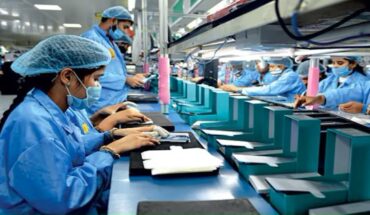
India, today is producing worth Rs. 1.27 lac crore’s defence equipment under its noble and unique concept of Atmanirbharta or self-dependence. Not only this India has also become the second largest exporter of Mobile Phones. 10 years ago, only 26 percent mobile phones were made in India but now almost 99 percent are being made in India. 38 This goes to show India’s prowess in the field of technology that despite US warnings to the CEO of Apple to not to manufacture I phones in India these are being manufactured in India in much cheaper cost. The shifting of major business of Apple from China to India is quite significant and indicates India’s gradual replacement for China, famous for flooding the world markets with cheap quality and mass-produced goods is also a decent pointer of the way world is now seeing India.
A recent SDG (Sustainable Development Goals) report shows that India has now earned 100 th place in the SDG ranking of 167 countries. The recent report says that with 67 marks India has earned 99 th place whereas China is placed at 49 and the US at 44. The gap between China and US is gradually reducing but the gap between India and China is increasing, even Bhutan with 74 marks, Nepal with 85 marks, Maldives with 53 and Sri Lanka with 73 marks is ahead of India. This scenario definitely indicates towards India’s poor status but at the same time it is also assuring that India has progressed from 109 in 2024 to 99. But a country which is working hard to become the third largest economy and Vishva Guru surely needs to show up to compete with China.
India’s government and tech industry are concerned about lagging behind China in deep tech innovation, particularly in manufacturing and AI. However, still, the United States continues to dominate AI-related investment, both as a source and destination. The Technology giants such as Google, Meta, Microsoft, and Open AI are driving a wave of investment in data centres and semiconductor facilities. Taiwan, China, Japan, and Germany are also major sources of AI-related cross-border investment, signalling a broader global effort to localise critical infrastructure and proactively work against concentrated risk. Though India is also increasing its foot prints through investment and policy support for AI and semiconductor development to catch up but China’s DeepSeek has triggered unease for the Indian government and its new technology industry. India’s historical focus on services over manufacturing, lower investment in research and development for a long time, and a brain drain of AI talent from India is responsible for it.
India’s commerce minister, Piyush Goyal, while reprimanding Indian startups commented and lamented that India lacks innovation as Indian startups are focused more on food delivery apps, turning unemployed youth into cheap labour whereas, Chinese startup work on developing electric mobility battery technologies, and with that, they dominate the electric mobility ecosystem. 38 Indian startup founders and investors on the other hand, hold bureaucratic red tape and import regulations on computing equipment as major barriers to innovation. Experts believe the gap between innovation and use of new technology between India and China dates back to the 1980s, when the two nations divided their economic path as China invested profoundly in manufacturing, and India into services. While China has 30 percent of global manufacturing output, India has only 3 percent. The Indian government in a survey also found out that private sector investment in research and development remains consistently low compared to countries like China, Japan, and the U.S. India’s service led mindset and decades of underinvestment in innovation have left the country far behind in the global tech race. 39 Despite, having considerable number of AI startups India is not a net exporter of AI talent. In AI and Data Science, Cloud computing, Quantum Technology, Cyber Security, Semi-Conductor, Green Hydrogen and Renewable energy, electric cars, defence and drone technology, despite many vacancies skilled manpower for these in India is not available.40
China’s urgency for semiconductor self-sufficiency started in 2014 with $150 billion while India started it in 2021 therefore, it is natural to have such differences in output. With US sanctions on China’s high-tech chipmaking since 2018, it has been promoting self-sufficiency in innovation, tech parks, research and development. 41 For improving performance of industry, startups, and researchers in this sector an enabling ecosystem needs to be developed by the Indian government also. However, the good news is that Indian firms from Reliance Aerostructure to Wipro, Bharat Forge and state-owned Defence Research and Development Organisation have been showing India’s growing prowess in defence, aeronautics, and civil aviation sectors which provides a ray of hope.
Moreover, India still holds over 20 percent of the world’s semiconductor design engineers and the leading 25 semiconductor companies in India with centers dedicated to design and research and development include global giants like Intel, Nvidia, and Qualcomm, as per the assessment of Information Technology and Innovation Foundation, a Washington-based science and technology think tank. With its $1.26 billion India AI mission, launched in March 2024, the Indian government has been increasing efforts to support AI startups and reduce reliance on foreign chip imports. The 2025 Technology and Innovation Report from the UN Conference on Trade and Development (UNCTAD) has highlighted that India with improved readiness for frontier technologies, ranked 36 th out of 170 countries. However, the US is the global leader in AI investment, contributing $67 billion, China is second with $7.8 billion, and India with $1.26 billion ranks tenth. 42 With China becoming gradually unreachable for foreign investors amid rising tariffs, industry experts have opined that India’s tech sector can have a beneficial position from the ongoing trade war. Microsoft with a $ 3 billion investment for the next two years in India’s cloud and AI infrastructure and Amazon with $120 million has shown interest in manufacturing and AI development in India. 43
China, the world’s biggest producer of rare earth elements, has also imposed restrictions with effect from April 4th, 2025 on the rare earth material exports to India stating that these can be used for both civil and military purposes. The restrictions are directed on seven rare earth elements: samarium, gadolinium, terbium, dysprosium, lutetium, scandium, and yttrium. These elements are crucial for producing rare earth magnets, which are widely used in various applications, including electric vehicles, smartphones, and defense technologies. 44 Since these are critical for electric vehicles, electronics, wind turbines and defence applications therefore, the restrictions, have already delayed shipments, causing shortages. The Indian automotive industry, especially electric vehicle (EV) manufacturers, have been affected, forcing Maruti Suzuki to stop its production of Swift cars. It simply indicates India’s over reliance on China for critical minerals. It also specifies the need for diversifying its supply chain and self-reliant approach because China has been working with an aim to dwarf India’s advantages and assert its dominance over supply chain for geopolitical leverage. Though Chinese curbs are causing pain to automakers across the world but in India, an added layer of uncertainty is being seen due to complicated ties with China. According to one media report the Indian auto component industry has no visibility on when it will be able to resume rare earth magnets from China. The industry that grew by 9.6 percent to $80.2 billion in 2024-25 is also facing other geopolitical challenges like tariffs from the US due to the failure of trade deal within the stipulated time frame and supply chain disruptions due to conflict in Middle East. 45
Strategies: India can replace China in new technologies very easily with much needed improvement in ease of doing business, stopping red tape and business hurdles. To fill up the gap between AI driven jobs and lack of skilled manpower, the skill based and quality education is urgently required. With strict guidelines for quality-based education India should stop producing non-qualified educated youth and produce employable qualified youth who can promote India’s status as a net exporter of AI driven technology. In view of the uncertain nature of relationship with China, India also needs to prepare a concrete plan to mitigate the restrictions on rare earth magnets by boosting domestic capabilities and securing alternative supply chains to reduce too much reliance on Chinese imports. India needs to take the hint being given by the industry seriously and prepare a proper plan to develop domestic capabilities as well as securing alternative supply chains to reduce its reliance on Chinese imports of rare earth magnets.
Pharma Sector
Pharma sector has also emerged as a major segment for rivalry between India and China because both are competing with one another to control the drug market and flow of medicine supply chain. India though, exports a wide range of generic drugs including analgesics, anti-inflammatory drugs, antibiotics, vaccines, and drugs for diabetes and hypertension and on account of producing generic medicine has become the third largest and low-cost manufacturer of medicine by volume but unfortunately, India’s pharmaceutical industries are severely dependent on China for Active Pharmaceutical Ingredients (API) or chemicals that are responsible for the healing effect of drugs. Though, the US is still the top most contributor with 40 percent share in production in the pharmaceutical market and accounts for a significant portion of global drug development, innovation and revenue generation but China with 11 percent contribution is not far behind. It has secured the second place and emerged as major player. China’s control over the API hampers India and other countries’ capacities to fully use their potential and beat China in its game. India’s dependence on China for “certain life-saving antibiotics” is around 90 percent. Indian industry is highly dependent on Chinese APIs for supply of penicillin, cephalosporins and azithromycin which needs to be reduced.46
However, India could establish its prominence during COVID –19 pandemic as India‘s homegrown COVID-19 vaccine Covaxin by Bharat Biotech, developed in collaboration with the Indian Council of Medical Research (ICMR) National Institute of Virology (NIV) during the peak of COVID proved to be a game changer in fight with COVID by saving many lives. India and many other countries were dependent on China for supply of COVID kits but India made herculean efforts not only to manufacture homemade Swadeshi good quality COVID safety gears, masks, gloves etc. but also developed appropriate infrastructure and most importantly anti-COVID vaccine in a fast pace. The promptness of vaccine delivery, coverage to a large area with a huge number of people in distant and different locations was very commendable. It established India’s reputation as great manufacturing hub of vaccines and these efforts were not only lauded in India but throughout the world. It also earned good will for India as by sending shipments of the vaccines as a grant to Bhutan and Maldives on 20 January 2021, just four days after starting its own vaccination program was seen as a great gesture. Shipments of Vaccines were also sent to Nepal, Bangladesh, Myanmar and Seychelles under its Vaccine Maitree programme and by March 2021, India also started supply of Covid vaccine to Canada, England and Saudi Arbia on a commercial basis.47 It exhibits in a big way that India’s investment in strong vaccine development infrastructure was a great initiative because due to this India did not lag behind any of the developed countries, or bagged for help but saved many precious lives not only within India but also in its neighbourhood.
Strategies
As India is aspiring to become a global power and termed by WHO as Pharmacy Capital of the world, therefore, in order to maintain that tag India has to scale up its production capacity to make these vaccines available across the world. At the same time India also needs to challenge the domination and monopoly of rich countries on vaccine supplies and fill up the gaps in delivering safe and cost-effective vaccines by developing a good production set up as well as managing supply chain. Since India has been manufacturing more than 60 percent of all vaccines sold across the globe through its $42 billion industry, therefore, more attention needs to be devoted for the development of this sector for optimum use. 48 India’s dependence on China for API in pharma sector needs to be mended through hard work, innovations, dedication, use of its full potential and infrastructure to match many other countries’ pharma production and business.
Conclusion
Now the New India and Rising India which aspires to become Vishwa Guru and leader of eminence in global affairs on the basis of its civilizational and cultural wealth, really needs to set its domestic and foreign policy in order. It needs to show exceptional leading qualities to give a direction to a troubled and war-torn world order or in Foreign Miniter S. Jaishankar’s words The India Way. 49 Astute Diplomacy needs to be developed to tackle the China-Pakistan challenge and also becoming part of suitable alliances without compromising its basic principles of independence, liberty, equity, sovereignty and compassion.
India on account of its economic and political stability and growth was largely courted by the US to address the Chinese challenge in Indo-Pacific by considering India as a pivot to Asia. India and the US came closer as the interests of both matched and Pakistan’s shaky democracy, fanatic nationalism and support to various terrorist groups made it a pro terrorist state. However, this policy seems to have changed with a new President in the US who is pro trade and desires to be known as a peacemaker in the world. The confusing US policies and ambiguity about its role in Indo-Pacific has given certain advantage to China which considers South Asia as its theatre. It has embarked further to curtail India’s growing influence and vigorously cementing the all-weather friendship with Pakistan. The sky rocketing Chinese aid in building highways, ports, military infrastructure and air defence system not only clearly indicates this bond but also the Chinese intention of keeping pressure on India. China also keeps on playing the Arunachal Pradesh card for putting pressure on India. The renaming of at least twenty-seven locations in Arunachal Pradesh in Chinese is also such move which India needs to tackle with smart diplomacy as well as position of power.
In foreign policy arena to tackle Chinese challenge India needs to be assertive and not to play the role of junior partner to the US. For seeking such parity India really needs to increase its moral power, political leverage, defence capabilities through investing more in defence, innovation, new technology and a flexibility to embrace the various changes. India needs to behave like a self-sufficient civilizational state and give no country the liberty to bullying or becoming big boss to dictate terms and conditions. India should also be open to alliances based on national interests and without compromising its autonomy especially to tackle Chinese challenge. The chaotic atmosphere, unemployment among educated youth, anarchy, increasing number of unplanned, unmanaged cities need to be changed for good and unbridled youth to be trained to become a productive human capital.
India’s uncertain and cautious approach to coalition politics need to be amended and be based on realistic assessment of national interests for its vision of becoming Vishwa Guru. A review of relations with China under the changing circumstances is also required so that maximum benefit could be achieved and answered in the same coin.
Prof. Annpurna Nautiyal– Former Vice Chancellor and Former Professor of Political Science HNB Garhwal University Srinagar, Garhwal Uttarakhand