





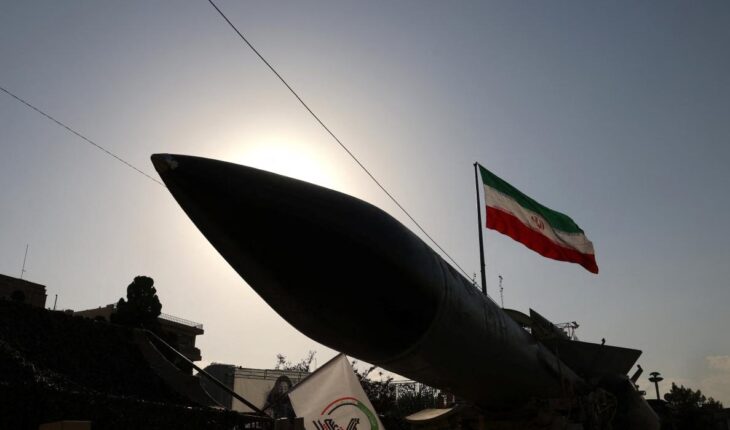
New Delhi: Nuclear tensions sharpened on Tuesday as developments around Iran’s uranium enrichment programme coincided with fresh military pressure on its nuclear facilities and an unprecedented statement from Poland indicating it may eventually seek its own nuclear weapons.
Speculation briefly surfaced after a 4.3 magnitude earthquake struck southern Iran, prompting claims online that it could have been a covert underground nuclear test. Seismologists rejected that theory, saying the tremor’s waveform and aftershock sequence matched natural tectonic activity. Monitoring networks did not record the sharp compressional signals typically associated with underground nuclear explosions.
Attention quickly shifted back to enrichment levels.
The International Atomic Energy Agency has confirmed that Iran is enriching uranium up to 60 per cent purity — well above the 3–5 per cent used for civilian energy and close to the roughly 90 per cent required for weapons-grade material. In its latest assessments, the agency has reported that Iran possesses hundreds of kilograms of uranium enriched at advanced levels. IAEA Director General Rafael Grossi has repeatedly warned that the agency’s ability to monitor aspects of Iran’s programme has been reduced in recent years, complicating verification efforts. While there is no confirmed evidence that Tehran has built or tested a nuclear weapon, Western officials have said that, if further enriched, Iran’s existing stockpile could theoretically provide fissile material for multiple devices.
Iran maintains that its programme is peaceful and remains a signatory to the Nuclear Non-Proliferation Treaty. Iranian officials have said enrichment at higher levels is reversible and intended for civilian research and energy needs.
The military dimension has added urgency. Entrances and support facilities at the Natanz Nuclear Facility — Iran’s primary enrichment centre — have reportedly sustained damage in recent air operations. The heavily fortified Fordow Fuel Enrichment Plant, built inside a mountain, remains operational and under international scrutiny. The IAEA has reported no radiation release from the sites following the strikes.
On the diplomatic front, Polish Prime Minister Donald Tusk said Warsaw must prepare for “the most autonomous actions possible” regarding nuclear security, acknowledging that Poland may eventually seek its own nuclear weapons. Poland does not possess nuclear arms and is bound by the Non-Proliferation Treaty, which prohibits non-nuclear states from acquiring them. Tusk’s remarks signal a significant shift in tone for a NATO member traditionally reliant on alliance deterrence.
Regional reactions have remained cautious but watchful.
Saudi Arabia has previously indicated that it would seek matching capabilities if Iran were to acquire a nuclear weapon. Turkey has expressed concern about any imbalance in regional nuclear capability. Meanwhile, France has reiterated its commitment to maintaining a credible nuclear deterrent as discussions continue over strengthening European strategic autonomy.
U.S. and European officials have continued to call for de-escalation and renewed diplomatic engagement with Tehran, while reiterating that preventing nuclear proliferation remains a priority. The IAEA said it remains in contact with Iranian authorities and continues to seek access to relevant facilities.
There has been no confirmation of a nuclear test in Iran, and seismic data from the recent earthquake indicates natural causes. Monitoring agencies have reported no radioactive leakage from affected nuclear sites. Diplomatic consultations among European and regional governments continued late Tuesday as developments around Iran’s nuclear programme remained under close observation.