





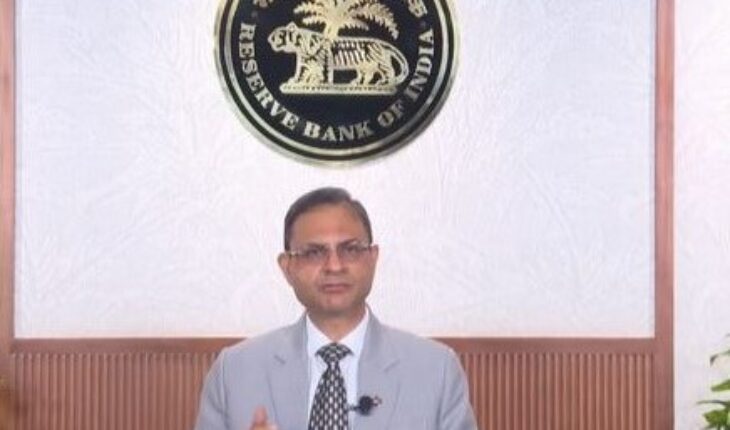
New Delhi: Reserve Bank of India Governor Sanjay Malhotra announced that the central bank stands ready to mitigate the economic impact of the United States’ decision to impose a 50 per cent tariff on Indian exports.
Speaking at the FIBAC 2025 event in Mumbai on Monday, Malhotra emphasised the RBI’s proactive approach to supporting the country’s economic growth and advancement.
The governor addressed concerns regarding the escalation of US tariffs, which have increased from an initial 25 per cent to the current 50 per cent level.
Malhotra disclosed that following the tariff announcement in April, the RBI had already revised its GDP growth projection downward by 20 basis points.
With the additional tariff increase now set to take effect within days, he expressed optimism that trade negotiations would yield positive outcomes and minimise the overall economic impact.
While acknowledging that 45 per cent of Indian exports remain outside the tariff framework, Malhotra identified several sectors that could face significant challenges, including gems and jewelry, textiles, shrimp exports, and micro, small, and medium enterprises.
He outlined a multi-pronged response strategy involving both government and central bank measures to support affected industries.
The RBI has implemented an accommodative monetary policy, reducing the repo rate by 100 basis points and ensuring adequate liquidity provision to the banking sector.
Concurrently, the government is pursuing structural reforms and advancing free trade agreements that have been under development for an extended period.
Addressing the longer-term strategy of rupee internationalisation, Malhotra highlighted ongoing efforts to promote trade in local currencies as a means of reducing dependence on foreign exchange markets.
The RBI has established currency agreements with four countries: Maldives, Mauritius, Indonesia, and the United Arab Emirates, with trade activities already commencing under these arrangements.
The governor characterised the shift toward local currency trading as a gradual process that would evolve over years or decades, while noting its immediate benefits in cushioning the economy from foreign exchange volatility.
This initiative forms part of the broader strategy to enhance the rupee’s international standing and reduce exposure to external currency fluctuations.
Malhotra expressed confidence in India’s macroeconomic stability, citing moderating inflation, steady growth patterns, external sector stability, and a sound financial system as key strengths.
He emphasised that these fundamentals provide a robust foundation for industrial expansion planning, supported by continued strong domestic demand and adequate buffers to absorb potential global economic shocks.