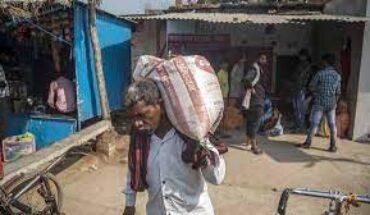







In August, as the Sutlej overflowed in Punjab’s Ropar district, Gurpreet Singh stood helplessly in chest-deep water, watching his paddy crop collapse. “I have lived through heavy monsoons, but this was different,” he said. “The river rose like a wall. We lost everything in a single night.” For Punjab, the land that once symbolised India’s Green Revolution, the irony is bitter: the state that feeds the nation is now drowning under floods, exposing vulnerabilities in both agriculture and urban planning.
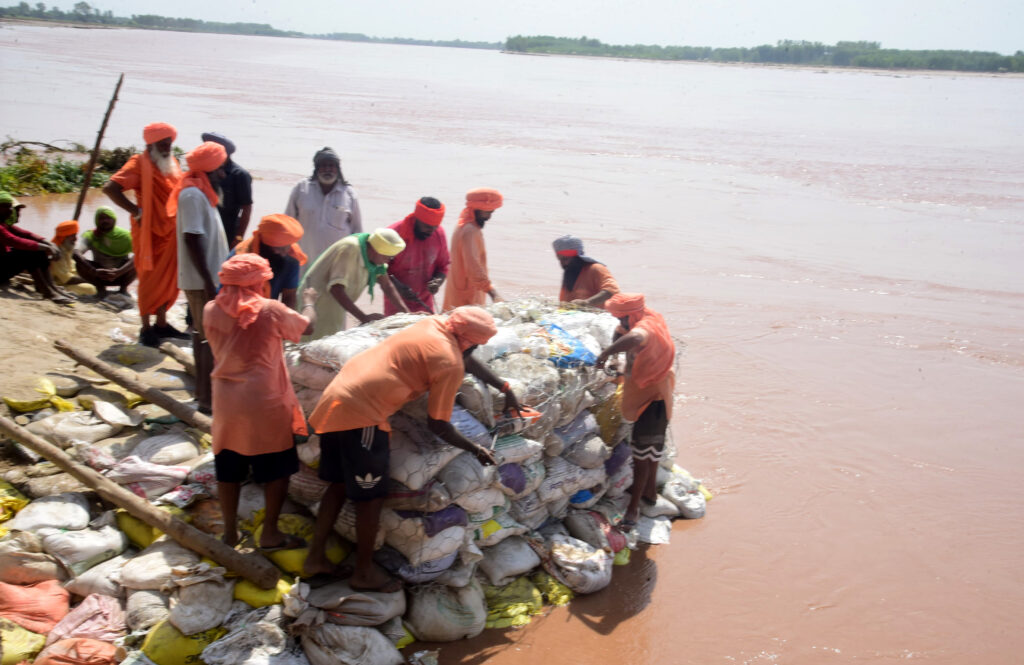
In the aftermath, images of submerged tractors, stranded cattle, and families relocating to relief shelters dominated local media. Relief operations rushed boats and food packets, yet the losses were staggering. Crops worth hundreds of crores were destroyed, roads snapped, and entire villages were marooned. Tens of thousands were displaced, and those who stayed behind faced immediate threats of waterborne diseases, collapsing homes, and long-term economic insecurity. The psychological toll on affected communities, often overlooked, compounds the physical devastation.

This catastrophe was not unique. Just weeks prior, Delhi’s Yamuna reached unprecedented levels, inundating low-lying colonies and disrupting arterial roads. Residents of Yamuna Bazar and Bela Road were evacuated as floodwaters crept into homes. In Himachal Pradesh, sudden cloudbursts triggered flash floods and landslides, sweeping away bridges and tourist buses. Assam, long accustomed to the Brahmaputra’s seasonal fury, faced yet another cycle of devastation. Southern cities, including Chennai and Bengaluru, experienced floods that breached the boundaries of luxury residential areas and IT hubs, showing that extreme rainfall does not discriminate between wealth or infrastructure robustness.
Together, these events highlight a new reality: floods are striking more frequently, more intensely, and in regions previously considered safe. Scientists attribute this to a warming climate, glacial melt, rising seas, and disappearing wetlands—synergistic factors that compound flood severity.
The Copernicus Climate Change Service confirmed that 2024 was the hottest year on record, the first in which global temperatures exceeded the 1.5 °C threshold above pre-industrial levels, with an average rise of about 1.55 °C and in some datasets approaching 1.6 °C. This milestone is not merely symbolic; it represents a tipping point that amplifies extreme weather events. Copernicus also recorded unprecedented sea surface temperatures and atmospheric moisture levels, increasing the potential for both heatwaves and torrential rains. The World Meteorological Organization described 2024 as marking “a new climate era,” in which historical weather patterns are no longer reliable indicators for planning and policy.
For India, the implications are immediate. Monsoons, once moderately predictable, now swing from droughts to floods in rapid succession. The Intergovernmental Panel on Climate Change has repeatedly warned that South Asia will face increased frequency and intensity of extreme rainfall events. Data trends corroborate this: some river discharge measurements show higher flood peaks, while others show reduced peak flows or altered timing, but the overall variability has intensified. The erratic monsoon undermines agriculture, threatens food security, and disrupts livelihoods.
One underlying driver of catastrophic floods is the disappearance of wetlands, which historically absorbed excess water. According to the UNFCCC and Ramsar assessments, wetlands are disappearing globally three times faster than forests. About 35% of wetlands were lost between 1970 and 2015, with accelerated decline since then. In India, studies indicate nearly one-third of wetlands have been destroyed since the mid-20th century, drained for construction or agriculture. The East Kolkata Wetlands, once an ecological marvel combining sewage treatment and fisheries, are shrinking under urban pressure. Loktak Lake in Manipur, crucial for local communities and biodiversity, is under stress from hydropower projects and siltation. In cities like Delhi, Hyderabad, and Bengaluru, lakes and ponds have been filled for real estate development. Ecologist Neha Sinha notes: “When wetlands vanish, floodwaters have nowhere to go. They spread into homes, markets, and farms instead.”
Delhi exemplifies the consequences of urban encroachment on floodplains. A recent study documented how the Yamuna’s natural floodplain has been consumed by highways, housing colonies, and embankments. This year, when the river surged, it reclaimed its space, inundating residential blocks, forcing evacuations, and collapsing traffic networks. Environmentalist Manoj Misra observes: “What we call floods are often just rivers reminding us of our greed.” The problem is systemic: urban drainage systems are often insufficient, rivers are treated as sewage channels, and planning regulations are frequently bypassed in the race for development.
In parallel, the Himalayas are becoming increasingly unstable. NASA’s global survey reports that glacial lakes have expanded nearly 50% in volume since 1990, driven by glacier retreat from rising temperatures, which in the Himalayan region are increasing at nearly twice the global average. Over 400 glacial lakes in Ladakh, Jammu & Kashmir, and Himachal Pradesh have been flagged as high-risk for sudden outburst floods. The 2013 Kedarnath disaster is a sobering example, where glacial melt combined with cloudbursts killed thousands. Last year, the South Lhonak Lake outburst in Sikkim destroyed bridges and power projects. Glaciologist Anil Kulkarni warns: “Each expanding lake is a disaster waiting to happen.” The analytical implication is clear: flood risk in India is not just hydrological but also topographical and climatic, with multiple interacting drivers.
Meanwhile, India’s coasts face a more gradual but equally severe threat. Sea levels are rising faster than projections, with recent regional studies suggesting that Tamil Nadu could experience up to 78 cm of rise by 2100 under high-emission scenarios, endangering Chennai and neighbouring districts. The IPCC identifies Mumbai, Kolkata, Chennai, and Surat as among the most vulnerable coastal cities, where events previously considered “once in a century” could occur annually. Coastal erosion, saltwater intrusion, and cyclone intensification—all driven by warming seas—compound the risks. Communities in Odisha and West Bengal have already been displaced by encroaching waters, while Kerala’s Alappuzha sees drinking water contamination from saltwater intrusion. Cyclones in the Bay of Bengal and Arabian Sea, such as Amphan in 2020, caused billions in damages, highlighting the economic and humanitarian toll of rising seas.
Other nations are pursuing massive infrastructure to adapt. Indonesia is constructing a giant sea wall to save Jakarta, a city sinking under over-extraction of groundwater and rising seas. India has yet to implement comparable protective measures. Experts caution that without proactive coastal planning, cities like Kochi, Chennai, and Kolkata could experience partial submergence within decades, disrupting commerce, transport, and urban governance.
Overlaying these environmental threats is a complex geopolitical dimension. China’s approval of the world’s largest hydropower dam on the Yarlung Tsangpo in Tibet, with a projected capacity of 60 GW, raises potential water security concerns for India. Controlling upstream flows on the Brahmaputra may amplify hydrological unpredictability, exacerbated by climate change. Downstream India faces uncertainty in river discharge, timing, and flood peaks, which could intensify interstate disputes and necessitate strategic diplomatic engagement.
India’s internal water disputes are already intensifying. The Indus Waters Treaty with Pakistan, though longstanding, faces stress under scarcity. Inter-state conflicts over the Cauvery, Sutlej-Yamuna link, and other rivers are increasing. Climate change compounds these disputes, with extreme rainfall or drought potentially triggering political tension. This intersection of environmental stress and geopolitics exemplifies the emerging concept of “water wars,” where ecological crises intersect with diplomacy and security.
The human cost of floods transcends geography and class. Punjab’s farmers watch crops rot; Delhi’s migrant workers abandon rented rooms; Mumbai’s office-goers wade through waist-deep water; Himachal’s shopkeepers struggle to rebuild; Assam’s displaced communities live year after year in temporary shelters. The World Bank estimates that urban flooding alone already costs India around $4 billion annually, with crop damage adding billions more. Low insurance coverage and insufficient relief exacerbate vulnerabilities.
Governance failures amplify disaster impacts. Embankments in Bihar collapse annually; urban drains remain clogged; encroachments are rarely removed until disaster strikes. Environmental impact assessments are frequently diluted to accommodate infrastructure projects. In Himachal, unregulated construction on fragile slopes continues despite repeated landslides. Assam’s embankments, poorly maintained, collapse with each monsoon cycle. Relief measures often address immediate suffering but fail to build systemic resilience.
Historical flood events—from Kerala 2018, Delhi 2010, Uttarakhand 2013, Assam’s recurring displacements—were early indicators of systemic failure. With 2024 confirmed as the hottest year in human history, the margin for denial has vanished. Climate change is no longer a future problem; it is a present, accelerating crisis.
Civilizational dependence on water’s balance is starkly visible. Too little water brings droughts and famine; too much causes ruin. India now experiences both extremes: droughts in Marathwada one year, flash floods in Himachal the next. Food security, urban infrastructure, health systems, and geopolitical stability are all stressed simultaneously.
Yet adaptation is possible. Wetlands and floodplains can be restored; Himalayan glacial lakes can be monitored via satellite and ground sensors linked to early-warning systems. Coastal zones can be planned with protective infrastructure and retreat strategies. Cities can redesign drainage systems, enforce building codes, and create green buffers. Farmers can transition to less water-intensive crops, supported by government policies. Diplomatically, India can strengthen frameworks on transboundary rivers to reduce conflict risk.
Such measures demand foresight and political will. Relief camps and compensation cheques, while necessary, are insufficient for long-term adaptation. Climate scientist Roxy Mathew Koll emphasizes: “We are already living in the age of climate upheaval. The question is not whether floods will happen, but whether we will adapt or collapse under their weight.”
From Punjab’s drowned paddy fields to Delhi’s submerged colonies, from Himachal’s fragile mountainsides to Odisha’s vanishing coastline, the message is clear: the waters are rising. Analytical evidence—rising temperatures, glacial melt, wetland loss, sea-level rise, infrastructure encroachment, and geopolitical tensions—shows that these are not isolated incidents but systemic threats to India’s society, economy, and security. The only viable path forward is strategic adaptation and resilience. Otherwise, floods and related crises could overwhelm India’s capacity to cope, pushing communities, cities, and entire regions toward cascading disaster.