





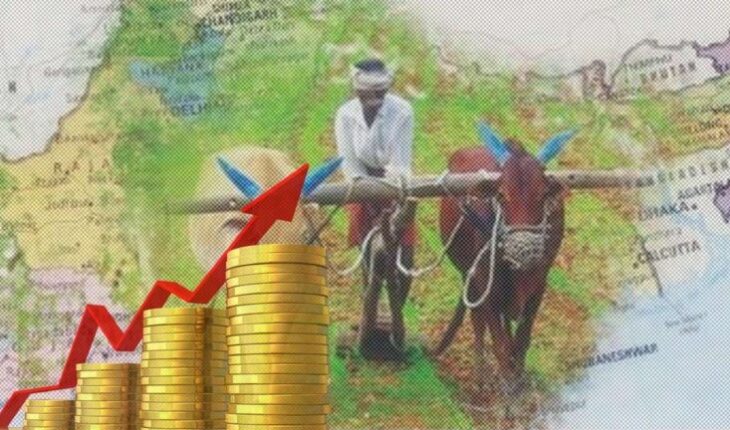
NABARD recently released a report revealing the implications of the Rural Economic Situation and Perception Survey (RECESS), conducted last year. According to the report, our country is rapidly moving towards realizing the concept of inclusive development, as the pace of economic recovery in rural areas has accelerated and rural inhabitants’ income and consumption have increased significantly, leading to a surge in economic activity in rural areas.
According to the survey, 84.2 percent of people believe that inflation will remain at 5% or less in the coming months. The Consumer Price Index, or retail inflation, is estimated at 2.0% for the current financial year, down from the earlier estimate of 2.6%. In the third quarter, it is estimated at 0.6%, down from the earlier estimate of 1.8%. For the fourth quarter of the financial year 2025-26, it is projected at 2.9%, compared to the earlier estimate of 4.0%. Retail inflation was 0.71% in November, 46 basis points higher than the October inflation rate of 0.25%. In urban areas, it was 1.40%, while in rural areas it was 0.10%.
In recent months, food grain inflation fell to a 50-month low of 0.1%. In November, vegetable prices decreased by 22.20%, pulses and related products by 15.86%, and spices by 2.89%. Inflation in transport and communication was 0.88% in November, compared to 0.94% in October. However, the decrease in inflation has increased the income of ordinary people and their purchasing power. Furthermore, due to low inflation, the Reserve Bank of India has cut the repo rate by 1.25% in four instalments since February of this year, thereby reducing bank lending interest rates and increasing savings and consumption among people.
The NABARD survey states that the rural economy has witnessed a strong recovery since September 2024, driven by increased incomes and consumption. Notably, 80% of families reported an increase in revenue during this period, and their spending also increased over the past year. However, 15.7% of families experienced a decrease in revenue. According to the survey, 75.9% of people expect their income to increase in the coming year. Furthermore, a 29.3% increase in investments was observed among families compared to the previous year, the highest increase to date.
The rationalization of the Goods and Services Tax (GST) slabs is significantly boosting rural savings, which are being utilized for both savings and consumption. Government subsidy schemes are also providing substantial support to rural families. An average of 10% of monthly income is covered through subsidized food, electricity, cooking gas, fertilizers, free meals in schools, uniforms, books, and other welfare transfers. For some families, the monthly subsidy amount exceeds 20% of their total income, helping stabilize rural demand and consumption.
The Pradhan Mantri Jan Dhan Yojana and Pradhan Mantri Mudra Yojana have led to the highest-ever access to credit from formal sources for rural populations. According to the survey, 58.3% of rural families have availed loans from formal sources, i.e., banks, which is the highest level ever recorded. This figure was 48.7 percent in September 2024. Meanwhile, the number of rural people borrowing from informal sources is still around 20%, indicating that there is still a need to expand financial inclusion in rural areas. Government banks are continuously working in this direction, and their efforts have resulted in the opening of over 57 crore Pradhan Mantri Jan Dhan accounts across the country.
The Jan Dhan Yojana aims to provide banking facilities to every individual. Under this scheme, there is no minimum balance requirement for opening an account, interest is paid on deposits, and accident insurance of ₹1 lakh is provided. In addition, it offers facilities such as life insurance of ₹30,000, direct deposit of government scheme benefits into the account, overdraft facilities, and pensions. Thus, this scheme provides economic and social security to rural populations.
Due to the continued strength of the Indian economy, the International Monetary Fund (IMF) has projected India’s growth rate at 6.6% for the current financial year. In comparison, the Asian Development Bank (ADB) has raised its estimate for India’s Gross Domestic Product (GDP) from 6.5% to 7.2%. According to the ADB, India has become Asia’s growth engine due to GST and other tax reforms and a sharp increase in consumption. Stable policy decisions, strong domestic demand, government investment, investment by global companies in India, rapid job creation, and a robust stock market are expected to drive unprecedented growth in India’s development rate over the decade from 2026 to 2035.
Thus, with moderate inflation, rationalization of GST slabs, government subsidies, and schemes like Jan Dhan and Mudra Yojana, both individuals and families in rural areas are becoming economically stronger, thereby boosting inclusive development in the country.
Satish Singh serves as a Senior Banking and Economic Columnist located in Mumbai.The insights presented in the article reflect his personal viewpoints and analysis.