






By Amanpreet Chhina
Comrade Achhar Singh Chhina’s life stands as a living prototype of what it means to design life by conviction, structure it with discipline, and deliver it in service to the community. Born in 1899 in the village of Harse Chhina, Punjab, his journey was neither accidental nor improvised. It was a life of clarity, sacrifice, and intention—an unyielding pursuit to live in a free country and to shape a future where his community would prosper through justice, self-reliance, and dignity. At every life stage, he applied a personal blueprint that fused education, international exposure, ideological commitment, and unwavering discipline. In doing so, he demonstrated that purposeful action—when aligned with the dream of collective emancipation—can outlast empires and inspire generations.
In his formative years, Chhina embodied the hunger for knowledge and justice. Educated at Khalsa College, Amritsar, he was part of a wave of young Punjabis whose education wasn’t merely a means to employment, but a foundation for national consciousness. His early resistance was not loud but intentional—he aligned with student protests, cultivated an anti-colonial outlook, and shaped a mind that questioned authority, not for disruption but for truth. In this first era of learning, he planted the seeds of identity, not just for himself, but for a future India.
In 1921, Chhina took a monumental leap by sailing to the United States alongside fellow revolutionary Pratap Singh Kairon. At UC Berkeley, his studies in engineering and political science were paralleled by nights at the Ghadar Bhavan in San Francisco—a haven of Indian revolutionary thought abroad. There, in that crucible of exile, activism, and education, Chhina began designing the first contours of his life blueprint: a plan not to escape colonial rule but to dismantle it from within and beyond. He merged thought with strategy, education with action, and solitude with collective purpose. His affiliation with the Ghadar Party was not a temporary expression of exile politics—it was a deliberate alignment with a global movement of Indian freedom fighters, rooted in sacrifice and coordination.
In the 1930s, Chhina’s blueprint matured further. Relocating to Detroit, he worked with Ford Motor Company by day, while organizing revolutionary circles by night. The Ghadar unit he established in Detroit became a model of diasporic solidarity and ideological mobilization. Yet, comfort never blurred his commitment. Rejecting the material allure of the West, he proceeded to the Soviet Union in 1932 to deepen his ideological training at the Far Eastern Federal University. For three rigorous years, he studied the dynamics of power, revolution, class struggle, and governance. His pursuit of knowledge was strategic, designed to equip himself for the realities of revolutionary leadership back home. Here, he demonstrated that learning, when purpose-driven, becomes a weapon of transformation.
Returning to India in 1936, Chhina’s arrest marked the beginning of a new era—one of relentless resistance and principled confrontation. His time in jail was not a pause in his journey but part of the plan—a sacrifice accounted for in his blueprint. In 1938, the Communist Party conference in Fatehwal was violently attacked, and Chhina, among others, was charged in the high-profile Fatehwal Murder Case. His eventual acquittal did not just restore his freedom—it reasserted his credibility. He had stared power in the face and not blinked. The blueprint had prepared him not just to lead in theory but to endure in practice.
One of the most audacious phases of Chhina’s life unfolded in 1940, when he and Netaji Subhas Chandra Bose initiated a plan to gain Soviet support for India’s freedom via Kabul. After Bose’s arrest, Chhina crossed into Soviet territory alone and proposed the formation of the “National Front for the Liberation of India” to Stalin’s advisors. Though the global conflict of WWII upended this mission, his action redefined the geopolitical outreach of India’s freedom movement. It wasn’t simply rebellion—it was diplomatic strategy on a global scale. He exemplified what it meant to act not just with courage but with long-term clarity: aligning revolutionary dreams with international collaboration.
Upon returning to India, Chhina was again imprisoned, this time in Lahore and Campbell Jail. Yet, each confinement only refined his ideological steel. When released on May Day 1942—a fitting symbol of labor and liberty—he took on the mantle of leadership as President of the Punjab Kisan Sabha. No longer a solitary revolutionary, he now led the collective struggle for land, water, and dignity. In 1946, his leadership in the Harsha Chhina Mogha Morcha mobilized thousands of peasants demanding fair access to irrigation water. Even when arrested, he did not flinch. The blueprint remained intact—freedom was not just a slogan; it was a system to be built for the community, through collective action and lawful assertion.
The post-independence phase of his life—the era often overlooked in revolutionary biographies—demonstrates how Chhina adapted his mission without compromising it. In 1952, under the very democracy he once defied, he was elected as an MLA from Ajnala and re-elected in 1957. He did not seek comfort in his later years—he turned to the legislature not for prestige, but for policy. His speeches echoed the voices of farmers, laborers, and village dwellers. His conduct in the Assembly was not transactional but transformational, ensuring that the values he fought for in the streets and jails were etched into the governance of free India. He did not merely imagine freedom—he implemented its promises.
The life of Comrade Achhar Singh Chhina teaches us that a blueprint for success must serve a cause greater than oneself. At every life stage, he acted not out of impulse, but out of structured intent. As a student, he sought identity and exposure. As a migrant, he organized. As a scholar, he studied power. As a revolutionary, he sacrificed. As a leader, he legislated. And at every turn, he proved that living with purpose means walking into adversity with your eyes open, your spine straight, and your heart aligned with justice.
His blueprint was not defined by comfort, wealth, or applause. It was shaped by clarity of mission, intellectual courage, and unshakeable service. He used education not for social climbing but for social awakening. He used global travel not for escape but for strategic alliance. He used leadership not for dominance but for redistribution—of rights, water, and voice.
In today’s distracted world, his life reminds us that freedom is not just the absence of oppression. It is the structured presence of justice, growth, and collective dignity. The village he left became the name he carried. The ideologies he embraced became the institutions he shaped. The blueprint he lived became the path he left behind.
His legacy does not rest in statues or slogans. It lives in the irrigation lines of Punjab, in the rights of peasants, in the voice of free citizens, and in the minds of those who believe that truth, when planned and lived with discipline, always finds a way.
He showed us that freedom is not given—it is built.
And the blueprint for it begins with one choice:
To live for more than yourself, with every step, and to never walk without purpose.
The Revolutionary Blueprint – Achhar Singh Chhina and the Architecture of Purpose
Published Date: 09-06-2025 | 10:02 am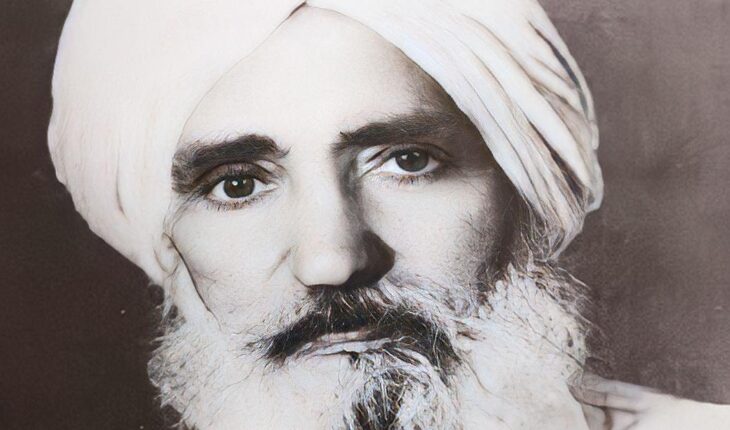
Related Posts

Potpourri
Is Big Boss injurious to mental health ?

Potpourri
Sonali Bendre says she almost ‘packed bags and left’ films before ‘Humma Humma’ became a hit
Potpourri
Yogi Adityanath Emphasizes Self-Sustaining Gaushalas Shares Views in Recent Meeting
Potpourri