






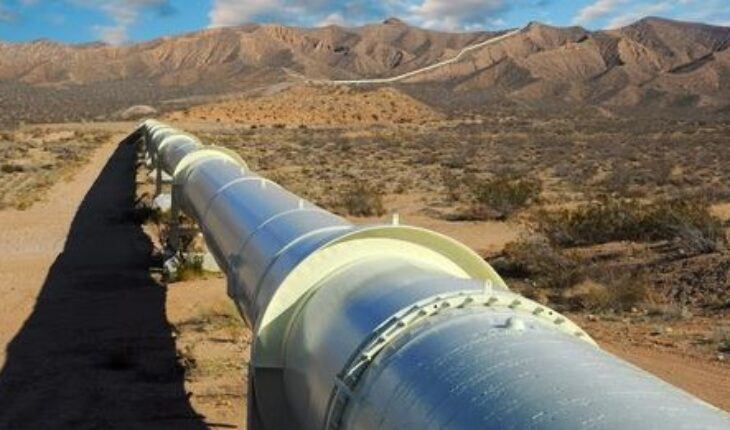
New Delhi : As U.S.–Iran military confrontation pushes the Strait of Hormuz toward instability, India faces a defining energy moment: the crisis threatening its fuel lifeline may also revive its most consequential strategic project—a direct gas pipeline to Iran that could permanently reduce its dependence on vulnerable sea routes. What was once blocked by sanctions, transit risks and geopolitics has been reshaped by three structural shifts: India’s sweeping long-term energy alignment with the United States, technological advances that eliminate Pakistan as a transit barrier, and Iran’s growing need for stable buyers amid deepening isolation. Together, they have created the most favourable conditions in nearly three decades for India to secure pipeline access to the world’s second-largest natural gas reserves.
For an economy projected to drive 25% of global energy demand growth over the next two decades, the implications would extend far beyond fuel—they would redefine India’s strategic autonomy.
India’s vulnerability begins—and could end—with Hormuz
India’s exposure to the Gulf conflict is structural and immediate. The country imports 85% of its crude oil, making it the world’s third-largest importer, nearly 50% of its natural gas, largely as liquefied natural gas (LNG) and over 60% of these supplies from West Asia. Nearly two-thirds of these imports pass through the Strait of Hormuz, the narrow chokepoint through which around 20 million barrels per day, almost one-fifth of global oil consumption, flows. Even oil sourced from the United States or Russia remains exposed to the same maritime risk. The economic consequences of disruption are severe. Every $10 rise in crude prices increases India’s import bill by roughly $15 billion annually, widens the current account deficit and adds to inflation. Pipelines offer the only permanent escape from this geographic vulnerability. Unlike tankers, they cannot be blockaded at sea.
Pipeline economics could deliver billions in long-term savings
Beyond security, the financial logic strongly favors pipeline connectivity. India currently imports around 30 billion cubic metres (bcm) of LNG annually, exposing it to volatile global prices driven by geopolitical shocks. The original Iran-India pipeline was designed to deliver 60 million standard cubic metres per day—over 21 bcm annually.
Pipeline gas typically costs 20–30% less than LNG, as it avoids liquefaction, specialised transport and regasification costs. Such supply could save India billions of dollars each year while providing stable, predictable pricing for decades. For a country seeking to increase natural gas from 6% to 15% of its energy mix by 2030, affordability and reliability are critical.
Technology has removed Pakistan, the project’s biggest strategic obstacle
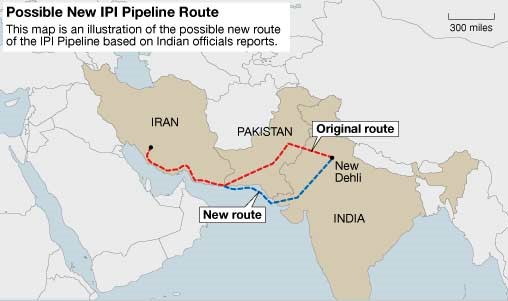
Geography, not economics, killed the original Iran-Pakistan-India pipeline. India was unwilling to risk its energy lifeline passing through Pakistan, where supplies could be disrupted during conflict. That constraint has now been overtaken by engineering. Advances in subsea pipeline construction allow gas transport across deep ocean floors over thousands of kilometers. Two now viable routes are the direct Iran-India offshore pipeline or the Iran-Oman-India subsea corridor. Both bypass Pakistan entirely.
Though such a project could cost $20–30 billion and take 5–7 years to complete, it would operate for decades, permanently shifting part of India’s energy supply away from vulnerable sea lanes.
India’s $500-billion U.S. energy partnership has reshaped geopolitical constraints
For decades, American sanctions were the single biggest barrier to India-Iran energy cooperation. That equation has shifted. India’s sweeping long-term energy agreement with Washington—reportedly involving commitments of up to $500 billion in crude, LNG and energy technology purchases over time—has deeply integrated the two economies. This serves U.S. strategic and commercial interests while giving India unprecedented flexibility. With diversified supply from the United States, Russia, and global LNG markets, India is no longer dependent on Iran. It can engage Tehran from a position of strength.
That shift, from energy dependence to energy leverage, marks the single biggest strategic change since India first pursued the pipeline in the 1990s. Paradoxically, India’s closer energy partnership with Washington may have created the diplomatic space needed to reopen Tehran.
Iran’s isolation has increased India’s bargaining power
Iran possesses extraordinary energy wealth. It holds over 34 trillion cubic metres of natural gas reserves, the world’s second-largest, yet sanctions and geopolitical isolation have restricted its export options. India offers one of the few large, stable markets capable of absorbing such supply. Unlike in earlier decades, Iran now needs reliable buyers as much as India needs a secure supply, which reverses the original negotiating dynamic. A direct Iran-India pipeline would deliver structural advantages across India’s economy. It would reduce exposure to maritime chokepoints, lower long-term energy costs, and improve macroeconomic stability. Most importantly, it would shift part of India’s energy system from vulnerable sea routes to fixed continental infrastructure.
Crisis may finally deliver what diplomacy could not
For more than three decades, geopolitics prevented India from directly accessing Iranian gas. Today, geopolitics may enable it. The Strait of Hormuz crisis has exposed the fragility of India’s tanker-dependent energy model with unusual clarity—but it has also created leverage India never possessed before.
If New Delhi succeeds in converting this moment into pipeline connectivity, it would not simply secure cheaper fuel. It would permanently shift India from being a price-taker in volatile global markets to a nation with fixed, strategic control over a critical part of its energy future.
In geopolitics, such windows rarely remain open for long. India may not see another opportunity like this for decades.