






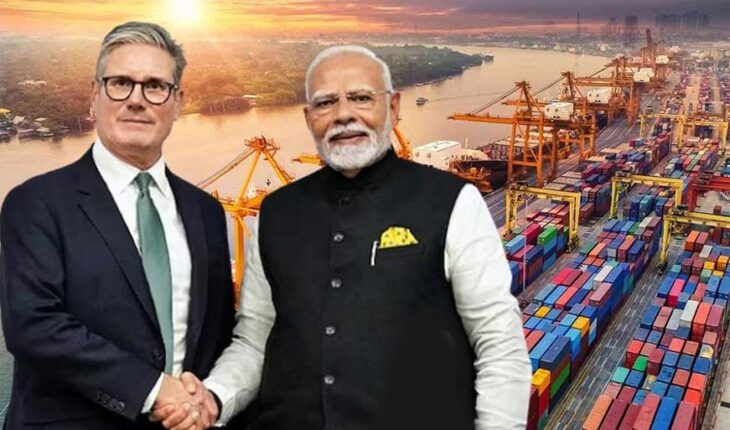
New Delhi: India and the United Kingdom are in the final stages of launching a Free Trade Agreement (FTA) that aims to boost bilateral trade by focusing on sectors like electric vehicles (EVs), textiles, and labour mobility.
The deal, in development since January 2022, is expected to be signed soon, following 14 rounds of negotiations.
According to UK Trade Commissioner for South Asia, Martin Kent, the FTA is designed to deliver “something genuinely impactful” for both economies.
While declining to give a timeline, he confirmed that the negotiations are close to completion and are expected to benefit key industries and consumers in both countries.
The proposed agreement is anticipated to reduce or eliminate tariffs on a wide range of products.
This includes increased market access for Indian textile and leather exports, and potential tariff cuts for British EVs entering the Indian market.
Additionally, the deal may include provisions on services and smoother labour movement, which could enhance the mobility of professionals between the two nations.
The FTA is also seen as a major step toward strengthening geopolitical and economic ties between India and the UK.
This agreement forms a part of the UK’s post-Brexit strategy to strengthen trade relations with major global markets.
On the other hand, it aligns with India’s goal of expanding its export markets and attracting advanced technologies.
The trade volume between India and the UK reached around $21.34 billion in 2023-24. Once finalized, the FTA is expected to give a strong push to this figure, particularly by unlocking new opportunities for Indian manufacturers and British exporters.